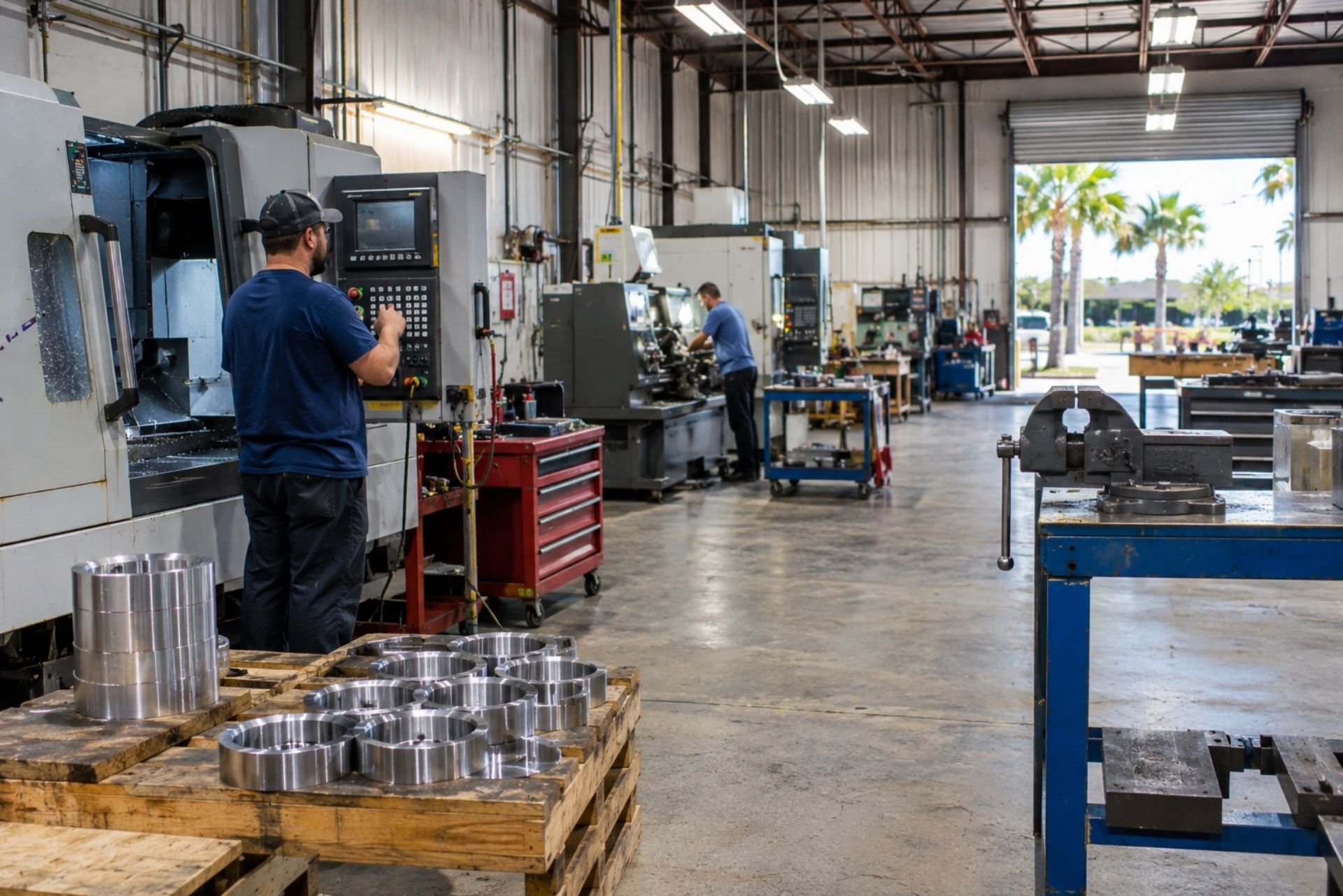
A single scrapped aerospace bracket can cost a Florida machine shop more than its annual general liability premium. A defective hydraulic fitting that fails in the field can cost far more than that. Most shop owners understand risk on the floor : they track tolerances to the ten-thousandth and lock out spindles before a tool change. Many of them still carry an insurance program that hasn't changed since the day they signed the lease.
This guide covers
machine shop insurance in Florida the way an underwriter or a claims adjuster would look at your operation. It walks through liability, property, equipment breakdown, business income, workers' comp, and what you can expect to pay. If you run CNC mills in Tampa, a Swiss-turn cell in Orlando, or a job shop off an industrial park in Doral, each section points to the gaps that most often turn a bad day into a bad year. Use it as a working checklist when your renewal comes due.
The Risk Landscape for Florida Machine Shops
Florida shops face a risk mix that a machine shop in Ohio or Michigan simply doesn't. Your exposures fall into three buckets : the work itself, the parts you ship, and the place you operate.
The work itself is dangerous. Rotating chucks, flying chips, coolant mist, heavy fixtures lifted by overhead hoists, and forklifts moving bar stock all produce injury claims. Lacerations and crush injuries are routine. Hand and finger amputations from lathes and press brakes happen often enough that underwriters ask about machine guarding on nearly every application.
The parts you ship carry their own risk. Florida has a deep base of aerospace, defense, marine, and medical device manufacturing along the Space Coast and around Melbourne, Jacksonville, and Tampa Bay. If you machine components for those customers, a single nonconforming part can trigger a recall, a lawsuit, or a contract dispute. Customer contracts often demand specific limits and additional insured status before you can quote the job.
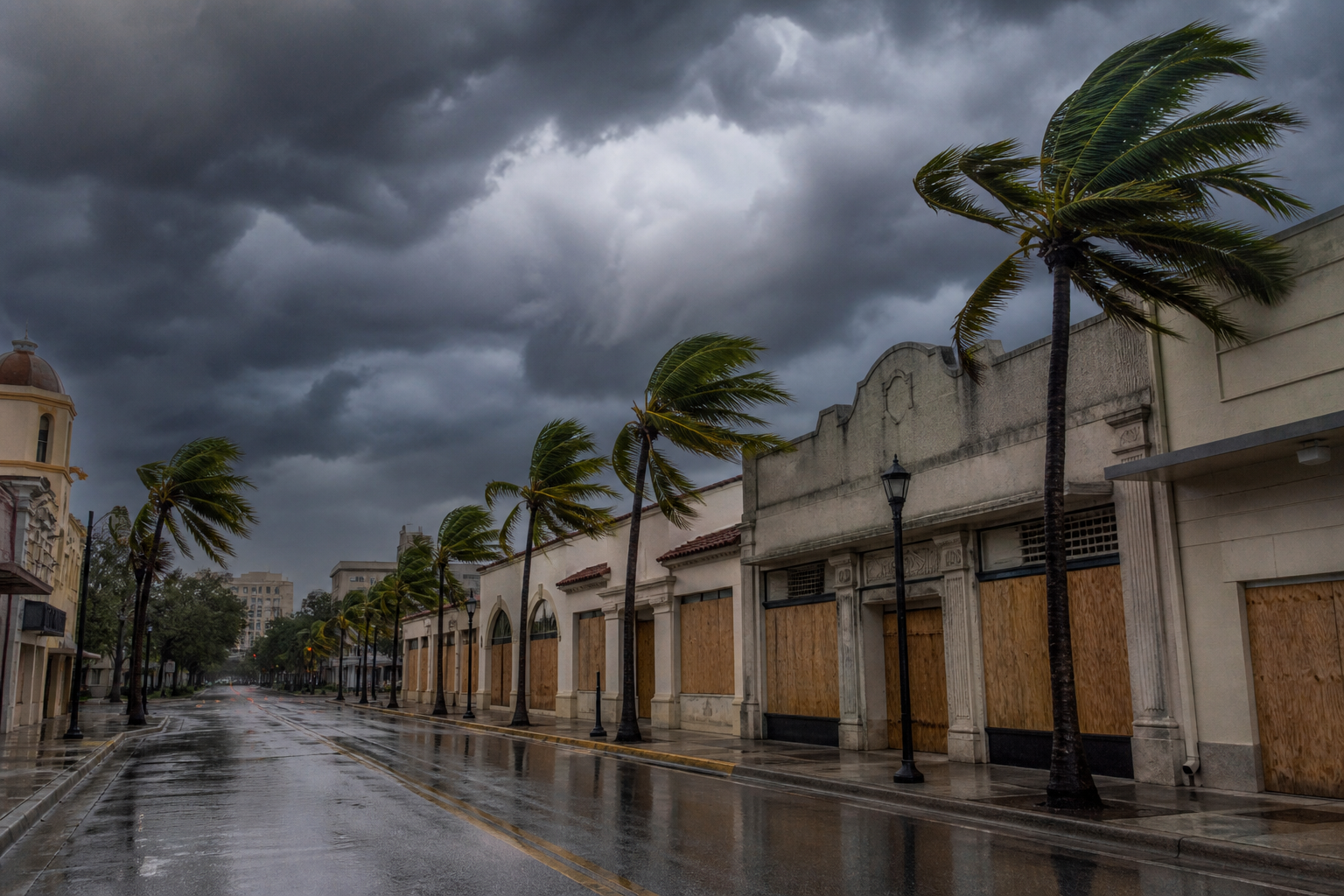
Then there's geography. Hurricanes, named storm deductibles, storm surge, and the saltwater air that corrodes electronics and exposed ways on machines all affect your property program. Florida regulators issue catastrophe reporting data calls after major storms. One example is a
state notice to insurers on hurricane catastrophe reporting, and those notices shape how carriers price coastal commercial risks. Here's what that means for you : the questions an underwriter asks about your roof, your elevation, and your storm prep matter as much as your loss history.

By: Montreal Morand
Founder & Managing Partner
Macpherson Insurance Agency
Core Liability Protections: General vs. Product Liability
Liability coverage is where shop owners most often assume they're covered and later find out they aren't. General liability and product liability sound similar, and they often sit on the same policy form. They respond to very different kinds of claims, though, and the limits and exclusions on each need separate attention.
General Liability for Third-Party Incidents
General liability (GL) covers bodily injury and property damage to people who don't work for you. It also typically covers personal and advertising injury. Think of a customer's quality inspector who visits your shop for a first-article inspection, trips over an air hose, and fractures a wrist. Or a delivery driver who slips on coolant near your loading dock.
GL also covers damage you cause at someone else's location. Say your crew installs a fixture at a customer's plant in Sanford and drops it, cracking their epoxy floor. Your GL policy responds to that damage.
One thing to keep in mind is that GL won't pay for injuries to your own employees. That's workers' comp. It also won't pay to redo your own faulty work, which is a gap that surprises many owners. Market estimates for a typical Florida machine shop put general liability somewhere around $500 to $2,500 a year, depending on revenue, operations, and limits. Most customer contracts require at least $1 million per occurrence and $2 million aggregate, and aerospace or defense primes often want more through an umbrella.
Product Liability and Manufacturing Defects
Product liability, part of the "products-completed operations" coverage, responds when something you made causes injury or damage after it leaves your shop. This is the bigger exposure for most machine shops. Your name may sit on a component buried deep inside someone else's assembly, but plaintiffs' attorneys name every company in the supply chain.
Picture this : you machine a batch of stainless valve stems for a marine pump manufacturer in Fort Lauderdale. A heat-treat issue you didn't catch causes one to fail. The pump floods a yacht's engine room. You could face a property damage claim, a defense bill, and possibly the cost of a recall if the customer pulls every pump from that lot.
Here's where operators get caught. Standard product liability usually excludes the cost of the recall itself, the value of your own defective part, and damage to "your product." Those exposures need a product recall endorsement or a separate policy. Aerospace parts often fall under an aircraft products exclusion entirely, which means you'd need dedicated aviation products coverage. Ask your agent directly whether aerospace or medical work is excluded on your current form.
Protecting Physical Assets: Property and Equipment Breakdown
Your machines are your business. A five-axis machining center, a CMM, and a wire EDM can represent more value than your building. Property coverage protects that value from fire, theft, wind, and other perils. Equipment breakdown insurance fills in where standard property forms stop.
Commercial Property and Coastal Risks
Commercial property insurance covers your building (if you own it), your machines, tooling, raw material inventory, and work in progress. Typical estimates for a Florida machine shop run around $1,000 to $5,000 a year for commercial property. Shops with expensive equipment in coastal counties can land well above that.
Florida adds wrinkles that a generalist agent may miss :
- Named storm deductibles are usually a percentage of insured value, often 2% to 5%, not a flat dollar amount. On $2 million of equipment, a 5% deductible means $100,000 out of pocket before coverage kicks in.
- Flood is excluded on standard commercial property. Shops in low-lying areas of Hialeah, Pinellas Park, or along the St. Johns River need separate flood coverage.
- Corrosion and wear aren't covered. Saltwater air slowly eating your machine electronics is a maintenance issue, not an insured loss.
- Valuation matters. Insure equipment at replacement cost, not actual cash value. A 15-year-old Haas paid out at depreciated value won't buy you a new one.
The catch is that underinsuring to keep premiums down can trigger a coinsurance penalty. If you insure $1 million of equipment for $600,000 and suffer a partial loss, the carrier may cut your payout proportionally.
Inland Marine and Equipment Coverage
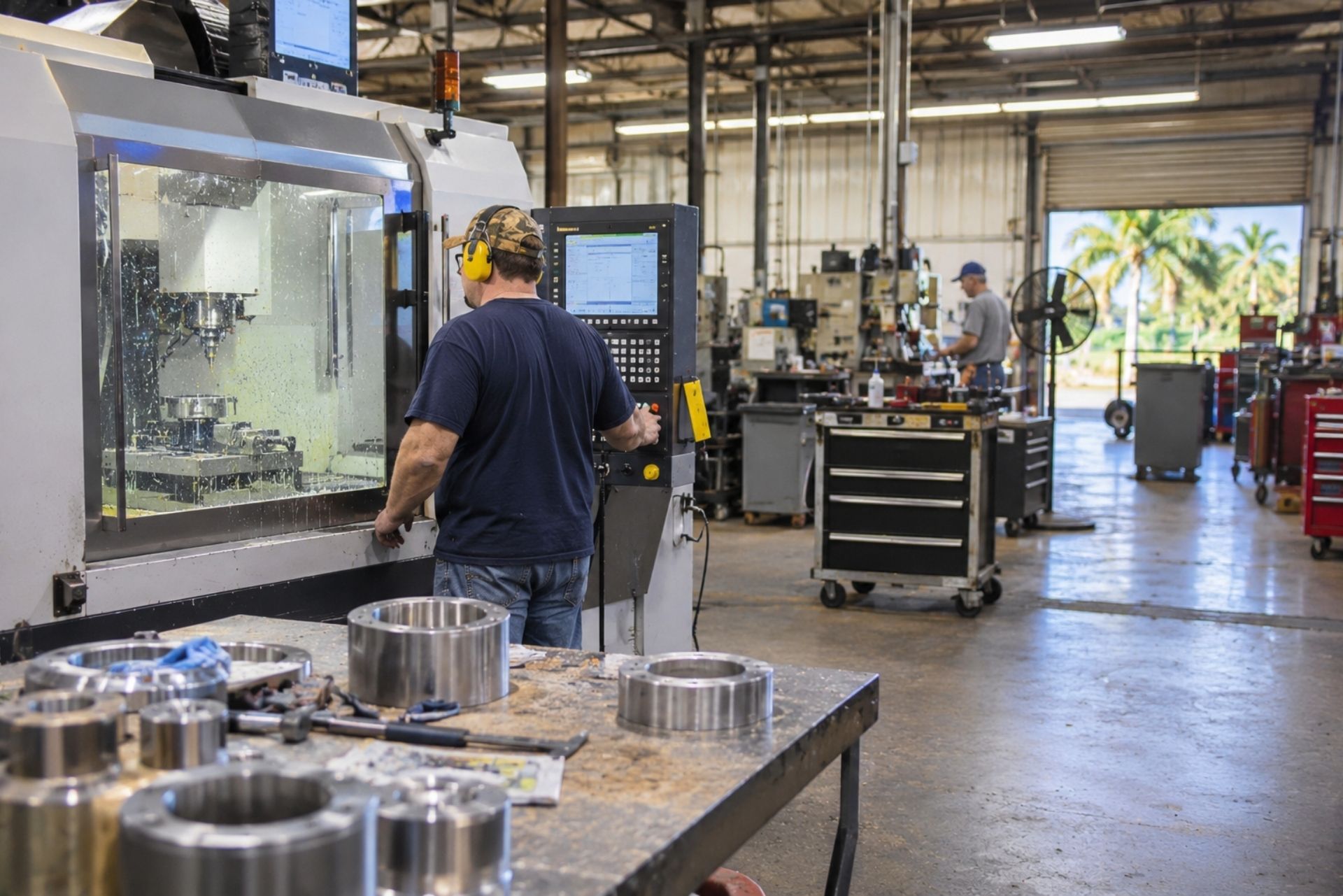
Equipment breakdown covers sudden mechanical or electrical failure: a spindle motor burning out, a power surge frying a CNC controller, or a compressor seizing. Standard property policies exclude this, because it isn't a "peril" in the same sense as fire or wind. During Florida's summer thunderstorm season, power surges that destroy controllers are one of the most common claims shops file.
Industry guidance puts it plainly : equipment breakdown endorsements are cheap relative to what they protect. A replacement controller for a high-end machining center can run tens of thousands of dollars before you count downtime.
Inland marine coverage, sometimes called a tools and equipment floater, protects property that moves. That includes gauges carried to customer sites, tooling sent out for coating, or a portable line-boring rig your crew takes to a shipyard in Jacksonville. Your building policy usually covers property only at your listed address, so anything in a truck or at a customer's facility may be uncovered without this.
Safeguarding Operations with Business Income Insurance
Most shop owners think about replacing machines after a loss. Fewer think about the months of revenue they'll lose while those machines are on order. Business income insurance replaces lost net income and covers continuing expenses like rent, loan payments, and payroll while you're shut down after a covered loss.
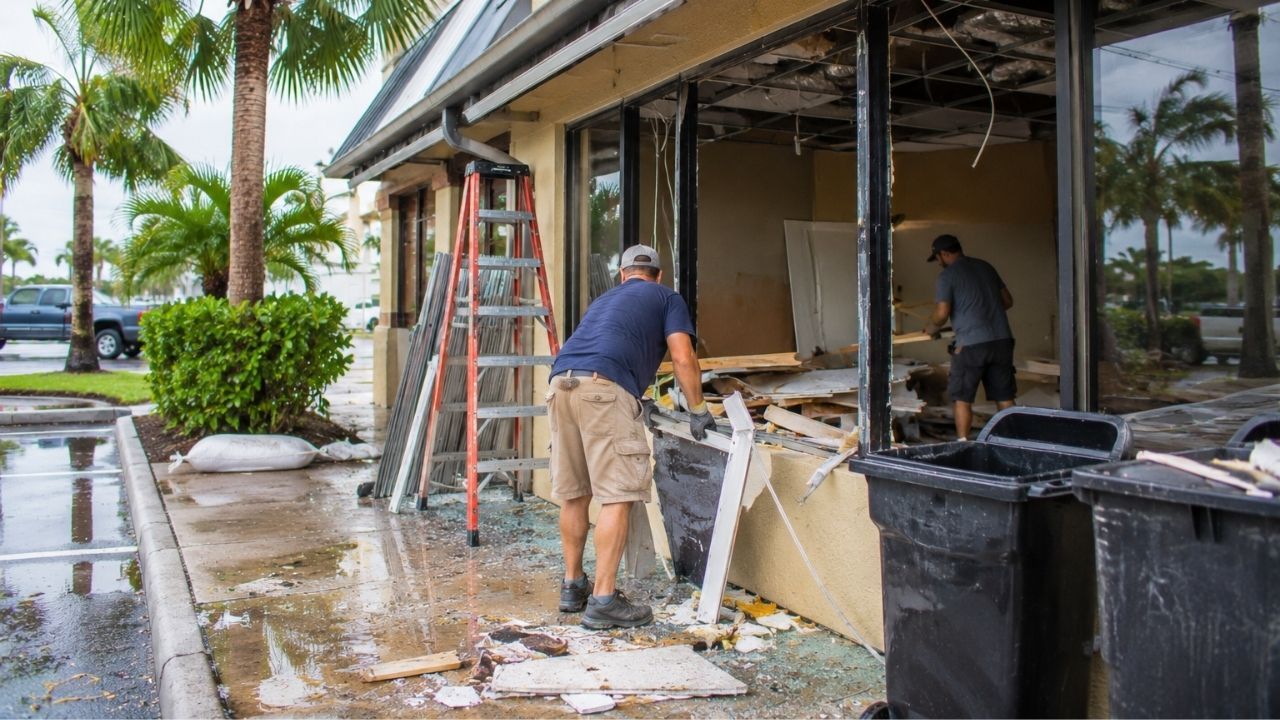
Here's a realistic scenario. A hurricane rips the roof off your building in Fort Myers and water ruins three CNC machines. Replacement machines have a lead time of 16 weeks, then you need rigging, installation, and leveling. Your biggest customer, a medical device OEM, can't wait. They move the work to a shop in Georgia and may never bring it back.
Business income coverage pays your lost profit and fixed costs during that restoration period. Extra expense coverage pays for things like renting temporary space, outsourcing urgent jobs to another shop, or paying overtime to catch up. Together they can keep you solvent and keep customers loyal.
A few details that matter more than most owners realize :
- Restoration period length. Many policies cap coverage at 12 months. With long machine lead times and post-hurricane contractor backlogs, that can be too short.
- Waiting period. Coverage usually starts after 72 hours. Know how many days you'd absorb.
- Utility service interruption. If a storm knocks out the grid for two weeks but your building is undamaged, you need this endorsement to collect.
- Dependent property coverage. If your only bar stock supplier goes down, this coverage can respond.
Underestimating the income limit is a common mistake. Base it on a realistic worst-case shutdown, not last year's average month.
Florida Workers' Compensation Requirements for Manufacturers
Workers' comp pays medical bills and lost wages for employees injured on the job, and in Florida it's mandatory for most businesses with employees. Florida sets different employee thresholds for construction and non-construction businesses. A machine shop doing fabrication in-house is typically classified as non-construction. If your crew installs equipment on construction sites, though, those operations may fall under stricter construction rules. Confirm your status with the Florida Division of Workers' Compensation rather than guessing, because penalties for noncompliance include stop-work orders and fines.
Benefits are capped by the state. For 2026, the maximum weekly compensation rate for Florida work injuries is $1,358. A skilled machinist earning a strong wage who loses a finger in a lathe injury could collect weekly benefits near that ceiling during recovery, plus medical costs.
Premiums are calculated per $100 of payroll by class code. Machine shops typically fall under Class Code 3632, which appears in the 2026 assigned-risk rate table used by Florida's residual market. Costs vary widely, but a shop with a $300,000 payroll can expect workers' comp costs of roughly $10,000 or more a year.
That said, your experience modification rate (EMR) can push that number up or down substantially. A few tips that move the needle :
- Classify clerical staff correctly so office payroll isn't rated as shop payroll.
- Document machine guarding, PPE, and lockout/tagout programs.
- Report injuries promptly. Late reporting drives up claim costs.
- Build a return-to-work program with light-duty roles like deburring or inspection.
Comparing Coverage Needs: Basic vs. Comprehensive
A two-person shop doing prototype work for local inventors doesn't need the same program as a 40-employee AS9100-certified supplier to Space Coast defense primes. Still, plenty of shops grow from the first into the second without updating their coverage. The table below shows where a bare-minimum program leaves you exposed.
| Coverage Area | Basic Program | Comprehensive Program |
|---|---|---|
| General Liability | $1M / $2M limits | $1M / $2M plus umbrella |
| Product Liability | Bundled in GL, standard exclusions | Higher aggregate, aerospace/medical addressed |
| Product Recall | Not included | Endorsement or standalone policy |
| Commercial Property | Building and equipment, ACV | Replacement cost, agreed value |
| Equipment Breakdown | Often missing | Included, with spoilage and data restoration |
| Inland Marine | None | Tools, gauges, and property in transit |
| Business Income | 12 months, no utility coverage | Extended period, utility and dependent property |
| Flood | Not included | Separate flood policy |
| Workers' Comp | Required minimum | Plus employer's liability limits raised |
| Cyber | None | Covers ransomware on CAD/CAM and ERP systems |
On the flip side, comprehensive doesn't mean buying everything. A shop that never sends tooling off-site may not need a large inland marine limit. A shop that only machines plastic prototypes for hobbyists may not need a recall policy. The goal is matching coverage to what you make, who you make it for, and where your building sits.
One gap worth flagging : cyber coverage. Machine shops increasingly get hit with ransomware that locks up CAM programs and job scheduling software. Defense contractors working toward CMMC compliance should take this seriously, because a breach of controlled technical data can cost you both money and your contracts.
Understanding the Cost of Machine Shop Insurance
Pricing for machine shop coverage varies more than most owners expect. Two shops with the same revenue can see premium quotes that differ by thousands of dollars, depending on the work they take and where they're located. Here's a rough picture of what a typical Florida shop might budget, using available market estimates :
- General liability: about $500 to $2,500 per year
- Commercial property: about $1,000 to $5,000 per year
- Workers' comp: roughly $10,000 or more on a $300,000 payroll
Product recall, flood, cyber, umbrella, and equipment breakdown add to those figures. Package policies, often called a business owner's policy or a manufacturer's package, can lower total costs by bundling property and liability, though many shops outgrow BOP eligibility once revenue or equipment values climb.
Factors Influencing Your Annual Premiums
Underwriters look at a consistent set of factors when they price your shop :
- Customer industries. Aerospace, medical, firearms, and automotive work carry higher product liability rates than general industrial parts.
- Location. Coastal counties like Miami-Dade, Broward, and Lee carry higher wind exposure. Building age and roof condition matter too.
- Payroll and class codes. Workers' comp rides directly on payroll and correct classification.
- Loss history. Three to five years of clean claims history earns better pricing.
- Equipment values. More expensive machines mean higher property and breakdown premiums.
- Safety programs. Written safety plans, OSHA compliance, and quality certifications like ISO 9001 or AS9100 show underwriters you control risk.
- Deductibles. Higher deductibles reduce premium, but make sure you can cover a named storm deductible in cash.
This matters because Florida's commercial insurance market tightened sharply after a series of costly hurricane seasons. State tort reform passed in 2023 aimed to reduce litigation costs, but property pricing still reflects heavy catastrophe exposure. Shop around with an independent agent who writes manufacturing risks, not just a general business agent.
Common Questions About Machine Shop Insurance
Do I need product liability if I only machine parts to a customer's drawing? Yes. Even build-to-print shops get named in lawsuits when a part fails, and you'll need coverage to pay your legal defense.
Does my general liability policy cover a part I machined wrong? Usually not. GL covers damage your faulty part causes to other property or people, but not the cost to remake or replace the part itself.
Will my property insurance cover hurricane damage to my machines? Wind damage is typically covered, subject to a named storm deductible. Flood and storm surge damage require a separate flood policy.
How much does workers' comp cost for a Florida machine shop? It depends on payroll and your experience rating. A shop with a $300,000 payroll can expect around $10,000 or more a year.
What happens if my CNC controller fries during a power surge? Standard property coverage usually won't pay. You need equipment breakdown coverage, which is generally inexpensive compared to the cost of a controller replacement.
Can my customer require specific insurance before giving me work? Yes, and many do. Aerospace, defense, and medical customers often require specific limits, additional insured status, and waivers of subrogation in their supplier agreements.
Making the Right Choice for Your Shop
The right insurance program for a Florida machine shop starts with honest answers about what you make, who relies on those parts, and how long you could survive a shutdown. Liability protects you from the claims that follow your parts out the door. Property and equipment breakdown keep your machines insurable against storms and surges. Business income buys you time to rebuild before customers walk. Workers' comp is the legal floor, and smart safety habits keep it affordable.
Before your next renewal, run through this quick audit :
- Pull your customer contracts and confirm your limits meet every requirement.
- Check whether aerospace or medical products are excluded on your liability form.
- Verify your equipment is insured at replacement cost, not depreciated value.
- Confirm equipment breakdown and utility interruption coverage are on the policy.
- Review your named storm deductible and make sure you could pay it.
- Audit your workers' comp class codes and payroll splits.
A general agent can sell you a policy. An agent who understands manufacturing can show you where your shop is exposed. Find the second kind, and get that review done before hurricane season, not after the first storm hits. Waiting until after a loss is too late.
ABOUT THE AUTHOR:
MONTREAL MORAND
With over 20 years of leadership experience in the insurance industry, I’ve dedicated my career to helping clients and agents make informed, confident decisions about their coverage. I’ve led high-performing teams, managed more than $128 million in premium, and earned multiple national awards for excellence. Today, my mission remains the same — to educate, empower, and provide dependable protection for the communities we serve.
Contact Us
Protect the Things That Matter Most
Reliable Coverage for Your Home & Lifestyle
Home Insurance
Protect your home, belongings, and personal liability with reliable coverage.
Stronger Coverage for Your Operations
Essential Protection for Your Company
Coverage built for businesses that depend on people, property, and equipment.
Industries We Support
Insurance for Everyday Local Businesses
Simple, reliable protection for the people who keep our communities running.
Plumbers
Plumbers Insurance
Protection for job-site hazards, tools, and customer property.
Restaurants
Restaurants Insurance
Coverage for fire risks, food inventory, and general liability.
HVAC Contractors
HVAC Contractors Insurance
Insurance for service vehicles, equipment, and installation risks.




Frequently Asked Questions
Helpful Answers to Common Questions
Quick guidance to help you understand your coverage.
What types of insurance does Macpherson Insurance Agency offer?
We provide both personal and commercial insurance solutions. On the personal side: homeowners, automobile, condo, renters, windstorm, flood, excess flood, and more. On the commercial side: general liability, property, inland marine, ocean marine, workers compensation, and more.
Do you specialize in homeowners insurance in South Florida?
Yes. We specialize in homeowners coverage in South Florida and work with multiple carriers based on your property’s age, location and replacement cost.
What does “replacement cost” mean in a policy?
Replacement cost is the cost to rebuild your home to the same standard it had before a loss — not the market value of your property.
Why is it important that my insurer is licensed in Florida?
Licensed Florida insurers are continuously monitored for financial stability — if one fails, the Florida Insurance Guaranty Fund may reimburse insureds for unpaid claims up to a limit.
Can I lower my homeowners premium with discounts?
Yes — mitigation features like impact glass, storm shutters, roof straps, and approved sheathing may qualify you for significant credit reductions.
Do you offer payment plans or premium financing?
Yes. In many cases, payment plans and premium financing are available to make coverage more affordable and manageable over time.
From the Blog
Helpful Tips & Insurance Guidance
Articles created to make insurance easier to understand.


Contact Us
Phone
Location