
Running a towing company in Florida means your trucks are on the road during some of the worst conditions imaginable: rush-hour pileups on I-95, tropical storms rolling through Tampa Bay, and late-night recoveries along poorly lit stretches of Alligator Alley. One wrong move, one damaged vehicle on your hook, or one injury at your
storage yard can wipe out months of revenue. The right insurance program isn't just a legal checkbox. It's the difference between surviving a bad claim and shutting your doors. This guide to towing company insurance in Florida breaks down what you need, why you need it, and how to avoid the coverage gaps that catch operators off guard. Whether you're running a single flatbed out of Ocala or managing a
fleet of 20 wreckers across Miami-Dade County, the stakes are the same. Florida's regulatory environment, weather exposure, and high traffic volumes create a unique risk profile that generic
commercial auto policies won't cover. Understanding the specifics now saves you from finding out the hard way during a claim.
Understanding Florida's Specific Towing Insurance Requirements
Florida regulates towing companies more tightly than many operators realize. The state treats tow trucks as commercial motor vehicles, which means you're subject to both state DOT rules and county-level towing ordinances. Cities like Jacksonville and Fort Lauderdale may impose their own insurance minimums on top of what the state requires, especially for operators on municipal rotation lists. Ignoring these layered requirements is where operators get caught.
State-Mandated Minimum Liability Coverage
Florida law mandates specific liability limits based on vehicle weight. For trucks under 35,000 pounds, you'll need at least $50,000 in combined single limit (CSL) liability coverage. Heavier trucks, especially those used for medium- and heavy-duty recovery, require higher limits. Many counties and cities push those minimums even higher for operators who want to participate in law enforcement rotation programs or highway clearance contracts.
Here's a quick breakdown of typical requirements :
| Vehicle Weight Class | State Minimum CSL | Common Municipal Minimum |
|---|---|---|
| Under 10,000 lbs | $50,000 | $100,000 - $300,000 |
| 10,001 - 35,000 lbs | $50,000 | $300,000 - $500,000 |
| Over 35,000 lbs | $75,000+ | $500,000 - $1,000,000 |
Meeting the bare state minimum won't cut it if you're bidding on contracts or working with motor clubs. Most require $1 million in liability at a minimum, and some insist on $2 million or more.
Florida No-Fault and Personal Injury Protection (PIP)
Florida operates under a no-fault auto insurance system, which means every registered vehicle must carry $10,000 in Personal Injury Protection. Your tow trucks are no exception. PIP covers medical expenses and lost wages for the driver and passengers in your truck, regardless of who caused the accident. This is separate from your commercial liability policy.
One thing to keep in mind : PIP has a 14-day window. If your driver is injured and doesn't seek medical treatment within 14 days, they lose access to PIP benefits entirely. Make sure your drivers know this rule. It's a common gap that leads to denied claims and frustrated employees.

By: Montreal Morand
Founder & Managing Partner
Macpherson Insurance Agency
Essential Coverage Types for Towing Operations
Standard commercial auto liability only covers damage your truck causes to other vehicles and people. It doesn't cover the car sitting on your flatbed, the vehicles stored in your yard, or a customer who trips on your lot. Towing companies need a layered insurance program built around the specific risks of the job.
On-Hook Towing Liability Coverage
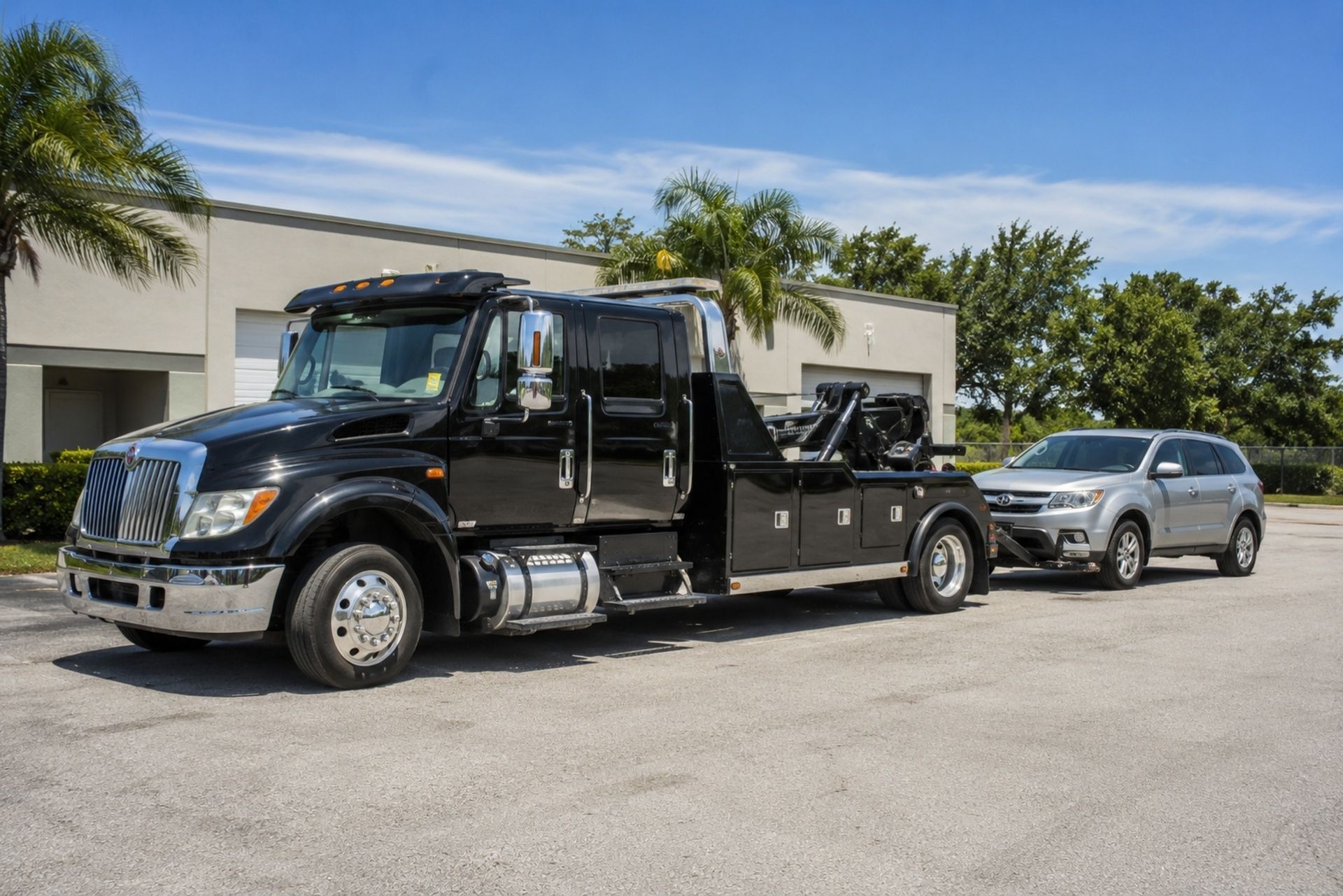
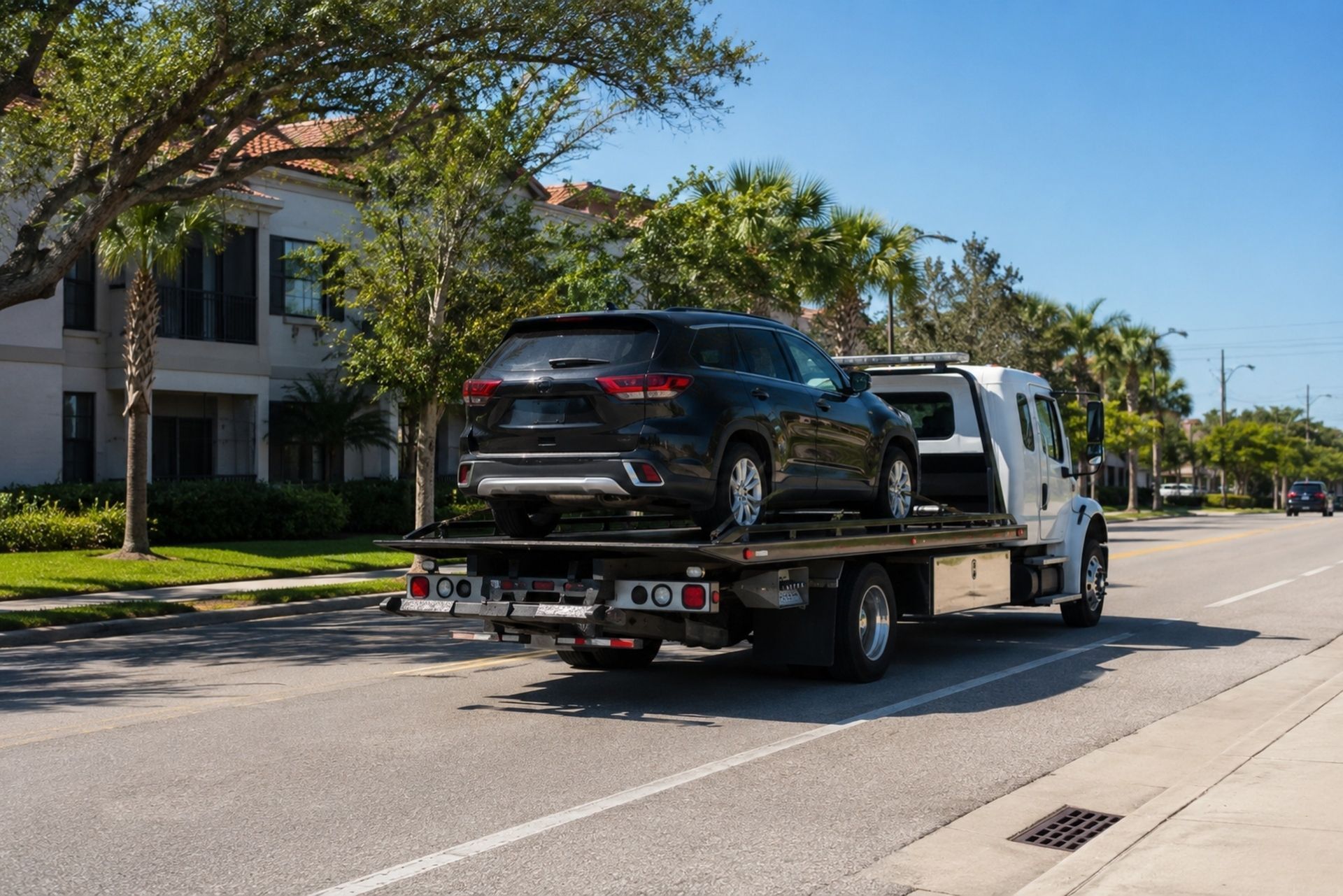
This is the coverage that separates towing insurance from regular commercial auto. On-hook coverage protects vehicles while they're being transported on or behind your truck. If you're hauling a customer's BMW down I-4 and get rear-ended, on-hook coverage pays for the damage to that BMW. Your standard auto liability won't touch it.
On-hook limits typically range from $50,000 to $150,000 per vehicle, but if you're towing luxury cars out of Brickell or recovering commercial vehicles, you may need higher limits. Imagine hooking up a $90,000 Tesla Model X and having it slide off your bed during a storm. Without adequate on-hook coverage, that's coming straight out of your pocket.
Garagekeepers Legal Liability
Once a vehicle leaves your hook and enters your storage lot, on-hook coverage stops. Garagekeepers legal liability picks up where on-hook leaves off. It covers vehicles in your care, custody, and control while they're stored at your facility.
Florida's storm season makes this coverage especially critical. A hurricane blowing through your yard in Fort Myers could damage dozens of stored vehicles in a single night. Garagekeepers policies can be written on a direct primary basis, meaning they pay regardless of fault, or on a legal liability basis, where you must be found negligent. Direct primary costs more but eliminates coverage disputes after a weather event.
General Liability and Medical Payments
General liability covers third-party injuries and property damage that happen on your premises or as a result of your operations, but not involving your vehicles. A customer slipping on an oil-stained floor in your office, a tow dolly rolling into a parked car at a scene : these fall under GL.
Medical payments coverage, often bundled with GL, pays for minor injuries to visitors or customers without requiring a lawsuit. It's a small cost that prevents small incidents from becoming expensive legal battles. Most towing companies carry $1 million per occurrence in GL with a $2 million aggregate.
Florida consistently ranks among the most expensive states for commercial auto insurance. High population density, aggressive drivers, and weather risks all push premiums upward. Understanding what drives your specific rate helps you control costs without cutting corners on coverage.
Driver Safety Records and CDL Requirements
Your drivers are your biggest liability and your biggest asset. Insurers pull motor vehicle reports (MVRs) on every driver you list on your policy. A single DUI or multiple at-fault accidents can spike your premium by 30% or more. Some carriers will refuse to write your policy entirely if a driver's record is bad enough.
Florida requires a CDL for tow trucks over 26,001 pounds GVWR, and some carriers offer premium discounts for operators whose entire team holds CDLs, even when not legally required. Investing in driver training programs and maintaining clean records across your team is one of the fastest ways to lower your annual premium.
Equipment Type and Fleet Valuation
A fleet of light-duty wheel-lift trucks costs far less to insure than a mixed fleet with heavy-duty rotators and landoll trailers. Insurers assess the replacement value of each unit, its age, and its intended use. A 2024 Jerr-Dan heavy-duty wrecker valued at $350,000 carries a very different risk profile than a 2018 flatbed worth $60,000.
Keeping accurate, updated vehicle schedules with your insurer matters. If you add a new truck and don't notify your carrier, that unit may not be covered. Florida insurers have denied claims on unlisted vehicles, and the financial hit can be devastating.
Florida's geography and climate create risks that towing companies in other states simply don't face. Salt air corrodes equipment faster along coastal routes. Summer thunderstorms pop up with almost no warning. And hurricane season, running June through November, can reshape your entire risk exposure in a single weekend.
Hurricane and Severe Weather Protection
Standard commercial auto policies often exclude flood damage. If your trucks are parked at a low-lying yard in Homestead when a storm surge rolls through, you could lose your entire fleet without a separate flood or comprehensive physical damage policy. The same goes for stored customer vehicles under your garagekeepers policy.
Many Florida towing operators add inland marine coverage or equipment floaters to protect specialized recovery gear like snatch blocks, chains, and portable light towers. These items aren't cheap, and they're often stored in vulnerable locations. After Hurricane Ian in 2022, operators across Southwest Florida reported six-figure losses on uninsured equipment alone. Don't repeat that mistake.
Uninsured Motorist Coverage in High-Traffic Zones
Florida has one of the highest uninsured motorist rates in the country, hovering around 20%. That means roughly one in five drivers on the road near your trucks carries no liability coverage. If an uninsured driver slams into your wrecker on the Palmetto Expressway, uninsured/underinsured motorist (UM/UIM) coverage fills the gap.
This coverage protects your drivers and your equipment. Given the volume of highway work towing companies perform, especially along I-75, I-95, and the Florida Turnpike, UM/UIM isn't optional in practice, even if it's technically elective. Skipping it is a gamble that rarely pays off.
Steps to Secure the Best Rates and Coverage
Getting the right policy at a fair price takes more effort than calling one 800 number. Florida's towing insurance market is specialized, and the difference between a good policy and a bad one often comes down to who's writing it and how well they understand your operation.
Working with Florida-Licensed Insurance Agents
Not every insurance agent understands towing. You want someone who knows the difference between on-hook and garagekeepers, who can explain why your rotation contract requires specific endorsements, and who has relationships with carriers that specialize in commercial auto for towing fleets.
Ask potential agents how many towing companies they currently insure. If the answer is fewer than five, keep looking. A specialist agent can often find coverage through surplus lines carriers or specialty markets that generalist agents don't access. This is especially true if your loss history isn't perfect or if you operate heavy-duty equipment.
Implementing Safety Protocols and Telematics
Carriers reward operators who demonstrate a commitment to risk reduction. Installing GPS-based telematics systems in your fleet gives insurers real-time data on driver behavior : speed, braking patterns, idle time, and route history. Some carriers offer premium discounts of 10-15% for telematics adoption.
Beyond telematics, document everything. Written safety policies, regular driver training sessions, pre-trip inspection logs, and incident reporting procedures all signal to underwriters that you're a lower risk. Florida's tort reform changes in 2023 and 2024 have shifted some liability dynamics, but insurers still price based heavily on your individual loss history and safety culture.
Making the Right Choice for Your Towing Business
Florida towing insurance isn't a one-size-fits-all product. Your coverage needs depend on your fleet size, the types of vehicles you tow, where you operate, and whether you hold municipal contracts. The operators who fare best are those who treat insurance as a strategic investment rather than an annual annoyance.
Start by auditing your current policies against the coverage types outlined here. Check your on-hook limits against the most expensive vehicle you'd realistically tow. Verify your garagekeepers coverage accounts for storm damage. Confirm every truck and driver is listed accurately. Then sit down with a Florida-licensed agent who specializes in towing operations and close the gaps before a claim forces you to find them the hard way.
Frequently Asked Questions
How much does towing company insurance cost in Florida? Most Florida towing operators pay between $8,000 and $18,000 per truck annually, depending on coverage limits, driver records, and equipment type. Heavy-duty wreckers and operators in high-traffic metro areas like Miami or Orlando pay toward the upper end.
Do I need separate flood insurance for my tow yard? Yes. Standard commercial property and garagekeepers policies typically exclude flood damage. If your yard is in a flood-prone zone, a separate flood policy through the NFIP or a private carrier is essential.
Can I operate without on-hook coverage in Florida? Technically, on-hook isn't state-mandated, but operating without it is reckless. One damaged customer vehicle could cost you tens of thousands. Most motor clubs and municipal contracts require it anyway.
What happens if I add a truck and don't tell my insurer? That truck likely won't be covered. If it's involved in an accident, your carrier can deny the claim entirely. Always update your vehicle schedule within days of acquiring new equipment.
Does Florida require workers' compensation for towing companies?
Yes, if you have four or more employees. Even with fewer, carrying workers' comp protects you from personal injury lawsuits filed by your own crew.
ABOUT THE AUTHOR:
MONTREAL MORAND
With over 20 years of leadership experience in the insurance industry, I’ve dedicated my career to helping clients and agents make informed, confident decisions about their coverage. I’ve led high-performing teams, managed more than $128 million in premium, and earned multiple national awards for excellence. Today, my mission remains the same — to educate, empower, and provide dependable protection for the communities we serve.
Contact Us
Protect the Things That Matter Most
Reliable Coverage for Your Home & Lifestyle
Home Insurance
Protect your home, belongings, and personal liability with reliable coverage.
Stronger Coverage for Your Operations
Essential Protection for Your Company
Coverage built for businesses that depend on people, property, and equipment.
Industries We Support
Insurance for Everyday Local Businesses
Simple, reliable protection for the people who keep our communities running.
Plumbers
Plumbers Insurance
Protection for job-site hazards, tools, and customer property.
Restaurants
Restaurants Insurance
Coverage for fire risks, food inventory, and general liability.
HVAC Contractors
HVAC Contractors Insurance
Insurance for service vehicles, equipment, and installation risks.




Frequently Asked Questions
Helpful Answers to Common Questions
Quick guidance to help you understand your coverage.
What types of insurance does Macpherson Insurance Agency offer?
We provide both personal and commercial insurance solutions. On the personal side: homeowners, automobile, condo, renters, windstorm, flood, excess flood, and more. On the commercial side: general liability, property, inland marine, ocean marine, workers compensation, and more.
Do you specialize in homeowners insurance in South Florida?
Yes. We specialize in homeowners coverage in South Florida and work with multiple carriers based on your property’s age, location and replacement cost.
What does “replacement cost” mean in a policy?
Replacement cost is the cost to rebuild your home to the same standard it had before a loss — not the market value of your property.
Why is it important that my insurer is licensed in Florida?
Licensed Florida insurers are continuously monitored for financial stability — if one fails, the Florida Insurance Guaranty Fund may reimburse insureds for unpaid claims up to a limit.
Can I lower my homeowners premium with discounts?
Yes — mitigation features like impact glass, storm shutters, roof straps, and approved sheathing may qualify you for significant credit reductions.
Do you offer payment plans or premium financing?
Yes. In many cases, payment plans and premium financing are available to make coverage more affordable and manageable over time.
From the Blog
Helpful Tips & Insurance Guidance
Articles created to make insurance easier to understand.





Contact Us
Phone
Location