Running an appliance repair business in Florida means dealing with risks most other states don't throw at you. Between hurricane season, strict refrigerant handling regulations, and the sheer volume of service calls in a state with over 22 million residents, your exposure to liability claims runs higher than the national average. A single water heater installation gone wrong or a refrigerator repair that damages a customer's hardwood floors can wipe out months of profit. The right insurance coverage for Florida appliance repair technicians isn't just about checking a box for compliance. It's about protecting the business you've built from the specific hazards you face every day in the Sunshine State.
Florida's regulatory environment adds another layer of complexity. The state requires specific licenses, bonds, and workers' compensation coverage that differ from neighboring Georgia or Alabama. Your service area matters too. Technicians working coastal routes from Miami to Jacksonville face hurricane-related claims that inland competitors rarely encounter. Understanding these Florida-specific requirements helps you avoid coverage gaps that could leave you personally liable when something goes wrong.
The household appliance repair market is
expected to reach USD 28,591.92 million by 2034, growing at nearly 10% annually. That growth means more competition, more service calls, and more opportunities for claims. Getting your insurance right from the start positions your business to capture that growth without the constant worry of uninsured risks derailing your progress.
Essential Insurance Coverage for Florida Appliance Repair Businesses
General Liability for On-Site Property Damage
Every service call puts you inside someone's home or business, surrounded by their property. General liability insurance covers the damage you might cause while working. That includes scratched floors from moving a refrigerator, water damage from a dishwasher hookup, or burns from a stove repair gone sideways.
Appliance repair contractors pay an average of $67 per month for general liability insurance, or roughly $807 annually. That's a modest investment considering a single property damage claim can easily exceed $10,000. Most policies cover bodily injury claims too, protecting you if a customer trips over your toolbox or gets hurt by equipment you're servicing.
Florida's legal environment has shifted recently. Recent tort reforms are bringing balance to the civil justice system, reducing excessive costs and strengthening the state's economic foundation. That said, you still need adequate coverage. Courts may be more balanced now, but claims still happen regularly in the repair industry.
Commercial Auto Insurance for Service Vans
Your personal auto policy won't cover accidents that happen while you're driving for work. Commercial auto insurance fills that gap, covering collisions, liability claims, and vehicle damage that occurs during service calls.
Florida requires minimum liability coverage of $10,000 for property damage and personal injury protection. Commercial policies typically offer much higher limits, which you'll want given the medical costs associated with serious accidents. If you employ other technicians who drive company vehicles, you'll need coverage that extends to all authorized drivers.
Consider adding hired and non-owned auto coverage if your technicians sometimes use personal vehicles for work. This protects your business when employees run to the parts store or make emergency house calls in their own cars.
Inland Marine Insurance for Tools and Equipment
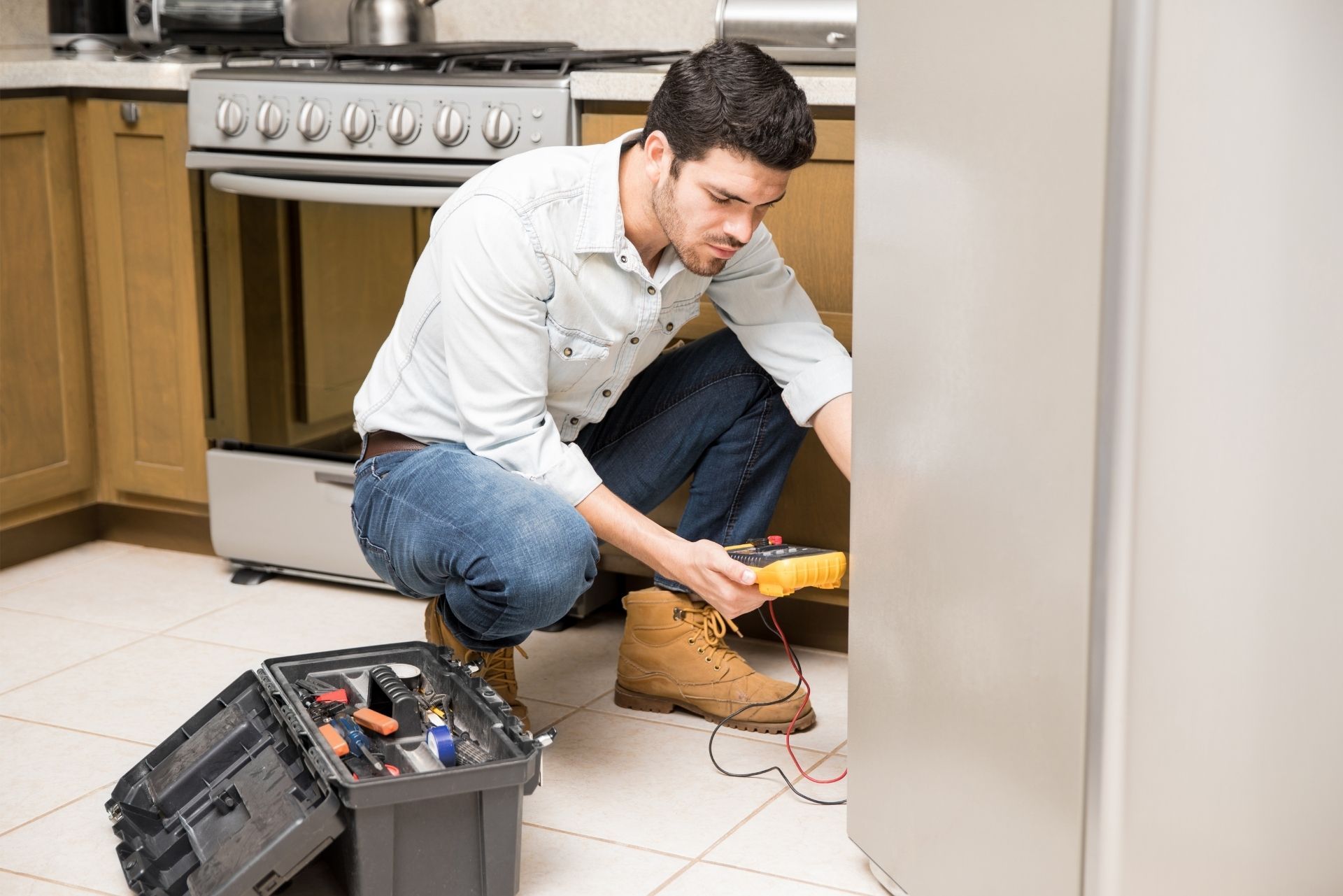
Your diagnostic equipment, specialized tools, and replacement parts don't stay in one place. They travel with you from job to job, making them vulnerable to theft, damage, and loss. Standard property insurance typically covers equipment only at your business location. Inland marine insurance protects your tools wherever they go.
A professional appliance technician might carry $15,000 to $30,000 worth of equipment in their service van. Multimeters, refrigerant recovery machines, hand tools, and parts inventory add up quickly. Inland marine coverage ensures a van break-in or accident doesn't leave you unable to work while you replace everything out of pocket.

By: Montreal Morand
Founder & Managing Partner
Macpherson Insurance Agency
Florida-Specific Regulatory and Legal Requirements
Workers' Compensation Mandates for Small Teams
Florida requires workers' compensation insurance for construction industry employers with one or more employees. Appliance repair often falls under this classification, especially if you handle HVAC components or gas appliances. Even sole proprietors may need coverage if they subcontract work or hire seasonal help during busy periods.
Workers' compensation for appliance contractors in Florida typically costs between $400 and $3,000 annually, depending on your payroll size and number of employees. The classification code assigned to your work affects your rates significantly. Technicians handling refrigeration equipment often face higher premiums than those focused solely on small appliances.
Failing to carry required workers' comp coverage exposes you to serious penalties. Florida's Division of Workers' Compensation can issue stop-work orders, and you'll face fines of twice the premium you should have paid. The state actively investigates contractors, so compliance isn't optional.
Licensing Bonds and Local Compliance
Florida counties and municipalities often require contractor license bonds before issuing permits. These bonds guarantee you'll follow local codes and regulations. If you fail to complete work properly or violate licensing requirements, the bond provides compensation to affected customers.
Bond requirements vary by location. Miami-Dade County has different requirements than Orlando or Tampa. Before expanding your service area, verify the bonding requirements in each jurisdiction. Some areas require separate bonds for different types of appliance work, particularly if you handle
gas connections or HVAC components.
Protecting Against Industry-Specific Risks
Pollution Liability for Refrigerant Handling
Standard general liability policies typically exclude pollution-related claims. If you service refrigerators, freezers, or air conditioning units, you're handling refrigerants that fall under EPA regulations. An accidental release can trigger cleanup requirements and potential fines that your basic policy won't cover.
Pollution liability insurance fills this gap. It covers cleanup costs, third-party claims, and legal defense if you're accused of improper refrigerant handling. Given the EPA's strict enforcement of refrigerant regulations and the phase-out of older refrigerants, this coverage has become increasingly important for appliance repair businesses.
The cost for pollution liability varies based on your volume of refrigerant work and claims history. Expect to pay $500 to $2,000 annually for adequate coverage. That's a reasonable expense considering a single refrigerant release incident can generate five-figure cleanup and penalty costs.
Completed Operations Coverage for Repair Failures
Your work doesn't stop being your responsibility when you leave the customer's home. Completed operations coverage protects you from claims arising after you've finished a job. If a washing machine you repaired floods the customer's basement three weeks later, this coverage responds.
Many general liability policies include completed operations coverage, but limits and exclusions vary. Review your policy carefully to understand what's covered and for how long after job completion. Some policies limit coverage to one year, while others extend protection for several years.
| Coverage Type | What It Protects | Typical Annual Cost |
|---|---|---|
| General Liability | Property damage, bodily injury during work | $800-$1,200 |
| Commercial Auto | Vehicle accidents during service calls | $1,200-$3,000 |
| Workers' Comp | Employee injuries on the job | $400-$3,000 |
| Inland Marine | Tools and equipment in transit | $300-$800 |
| Pollution Liability | Refrigerant releases, cleanup costs | $500-$2,000 |
Impact of Coastal Service Areas and Hurricane Risks
Where you work affects what you pay. Technicians serving coastal areas from Palm Beach to Pensacola face higher premiums than those working inland routes. Insurers factor hurricane exposure into their pricing, and Florida's coast represents some of the highest-risk territory in the country.
Your vehicle storage location matters too. If you park service vans at a coastal facility, expect higher commercial auto premiums. Some insurers offer discounts for businesses that relocate vehicles inland during hurricane warnings or maintain covered parking.
Property coverage for your business location follows similar patterns. A shop in Fort Lauderdale costs more to insure than an identical facility in Gainesville. If you're choosing a location for your business, insurance costs should factor into that decision.
Experience Rating and Safety Training Discounts
Your claims history directly impacts your premiums. Businesses with clean records qualify for experience rating discounts that can reduce costs by 15% to 25%. Conversely, multiple claims within a short period can push your rates significantly higher.
Safety training programs offer another path to savings. Many insurers provide discounts for businesses that implement formal safety protocols, conduct regular training, and maintain documentation. OSHA-compliant programs and manufacturer certification courses often qualify for these discounts.
Mobile app-based bookings now account for 40% of urban service appointments, which means more technicians working independently. Insurers increasingly evaluate your scheduling and dispatch systems when pricing coverage. Businesses using GPS tracking and digital work orders may qualify for better rates.
Steps to Secure the Right Policy for Your Repair Fleet
Start by documenting your actual exposures. List every service you provide, the equipment you use, and the areas you serve. Include any specialty work like gas appliance repair or commercial refrigeration that might require additional coverage.
Get quotes from at least three insurers who specialize in contractor coverage. General business insurers often miss industry-specific risks that specialist carriers understand. Ask each carrier specifically about completed operations limits, pollution exclusions, and how they handle refrigerant-related claims.
Small appliance repair businesses typically pay $1,000 to $2,500 annually for a Business Owner's Policy, which bundles general liability with property coverage. These packages often cost less than purchasing policies separately while providing broader protection.
Review your coverage annually, especially as your business grows. Adding employees, expanding service areas, or taking on commercial accounts all change your risk profile. What protected you adequately last year might leave gaps today.
Frequently Asked Questions
Do I need workers' comp insurance if I'm a sole proprietor with no employees? Florida generally exempts sole proprietors without employees from mandatory workers' comp requirements. However, if you subcontract work or hire seasonal help, you'll need coverage. Many general contractors also require proof of workers' comp before hiring subcontractors.
What happens if I work in multiple Florida counties with different requirements? You'll need to meet the requirements of every jurisdiction where you operate. This might mean carrying multiple bonds or obtaining separate permits. Check with each county's licensing board before expanding your service area.
Does my general liability policy cover damage from faulty parts I installed? Most policies cover your workmanship but exclude defective products. If a part you installed was defective from the manufacturer, your general liability may not respond. Products liability coverage addresses this gap.
How quickly can I get coverage if I need it for a job tomorrow? Many insurers offer same-day certificates of insurance for standard coverage. Specialty coverage like pollution liability may take longer to bind. Plan ahead when bidding jobs that require proof of specific coverage.
Will my rates go up if I file a claim?
One claim typically won't dramatically impact your rates, though it depends on the claim size and your history. Multiple claims within a three-year period will likely trigger premium increases or even non-renewal.
Protecting your Florida appliance repair business requires understanding both standard contractor risks and state-specific requirements. The combination of hurricane exposure, strict refrigerant regulations, and workers' compensation mandates creates a coverage landscape that differs from other states.
Start with a thorough review of your current policies. Identify gaps in coverage, particularly around pollution liability and completed operations. Then work with an insurance professional who understands Florida's contractor requirements to build a program that actually protects your business. The modest investment in proper coverage pays for itself the first time you face a claim that would otherwise come out of your pocket.
ABOUT THE AUTHOR:
MONTREAL MORAND
With over 20 years of leadership experience in the insurance industry, I’ve dedicated my career to helping clients and agents make informed, confident decisions about their coverage. I’ve led high-performing teams, managed more than $128 million in premium, and earned multiple national awards for excellence. Today, my mission remains the same — to educate, empower, and provide dependable protection for the communities we serve.
Contact Us
Protect the Things That Matter Most
Reliable Coverage for Your Home & Lifestyle
Home Insurance
Protect your home, belongings, and personal liability with reliable coverage.
Stronger Coverage for Your Operations
Essential Protection for Your Company
Coverage built for businesses that depend on people, property, and equipment.
Industries We Support
Insurance for Everyday Local Businesses
Simple, reliable protection for the people who keep our communities running.
Plumbers
Plumbers Insurance
Protection for job-site hazards, tools, and customer property.
Restaurants
Restaurants Insurance
Coverage for fire risks, food inventory, and general liability.
HVAC Contractors
HVAC Contractors Insurance
Insurance for service vehicles, equipment, and installation risks.




Frequently Asked Questions
Helpful Answers to Common Questions
Quick guidance to help you understand your coverage.
What types of insurance does Macpherson Insurance Agency offer?
We provide both personal and commercial insurance solutions. On the personal side: homeowners, automobile, condo, renters, windstorm, flood, excess flood, and more. On the commercial side: general liability, property, inland marine, ocean marine, workers compensation, and more.
Do you specialize in homeowners insurance in South Florida?
Yes. We specialize in homeowners coverage in South Florida and work with multiple carriers based on your property’s age, location and replacement cost.
What does “replacement cost” mean in a policy?
Replacement cost is the cost to rebuild your home to the same standard it had before a loss — not the market value of your property.
Why is it important that my insurer is licensed in Florida?
Licensed Florida insurers are continuously monitored for financial stability — if one fails, the Florida Insurance Guaranty Fund may reimburse insureds for unpaid claims up to a limit.
Can I lower my homeowners premium with discounts?
Yes — mitigation features like impact glass, storm shutters, roof straps, and approved sheathing may qualify you for significant credit reductions.
Do you offer payment plans or premium financing?
Yes. In many cases, payment plans and premium financing are available to make coverage more affordable and manageable over time.
From the Blog
Helpful Tips & Insurance Guidance
Articles created to make insurance easier to understand.




Contact Us
Phone
Location