
Running a
medical transport operation in Florida means dealing with a unique mix of regulatory pressure, high-risk passengers, and an insurance market that doesn't cut anyone slack. Whether you're operating wheelchair-accessible vans out of Jacksonville or coordinating dialysis rides across Miami-Dade County, the insurance you carry isn't just a business expense : it's the backbone of your ability to stay licensed and solvent. Florida NEMT operators are spending between $8,000 and $22,000 per vehicle annually on insurance in 2026, and those numbers climb fast if your coverage strategy is reactive rather than planned. This guide breaks down what you actually need to know about paratransit and non-emergency medical transport insurance in Florida, from state-mandated minimums to the risk management practices that keep premiums from spiraling.
Understanding Florida Paratransit and NEMT Insurance Requirements
Florida holds medical transport providers to a higher standard than typical commercial auto operations. The state treats NEMT vehicles as common carriers, which means your liability exposure is greater than a standard delivery fleet or ride-share service. You're transporting medically vulnerable passengers, often with mobility devices, oxygen equipment, or cognitive impairments that increase the duty of care.
Your insurance program has to satisfy multiple regulators simultaneously. The Florida Department of Financial Services governs your commercial auto policies, while the Agency for Health Care Administration (AHCA) controls your operating license. Missing a requirement from either side can ground your fleet overnight.
Minimum Liability and PIP Standards
Florida requires all motor vehicles to carry Personal Injury Protection (PIP) coverage of at least $10,000. But PIP alone won't cut it for NEMT operators. You'll also need commercial auto liability minimums, and most Medicaid-contracted providers are required to carry at least $1 million in combined single-limit liability per vehicle.
The state's no-fault insurance framework means your PIP covers your own passengers' medical expenses regardless of who caused the accident. That said, the $10,000 PIP cap runs out fast when you're transporting someone who already has serious medical conditions. Many operators carry supplemental medical payments coverage of $25,000 to $50,000 per person to fill the gap between PIP and a full liability claim.
Compliance with Florida Agency for Health Care Administration (AHCA)
AHCA licensing for NEMT providers in Florida requires proof of insurance before you receive or renew your operating certificate. Your policy declarations page must list each vehicle by VIN, and any lapse in coverage triggers an automatic license suspension. This isn't a warning letter situation : AHCA will pull your authorization to transport Medicaid patients the moment your insurer reports a gap.
Beyond the certificate of insurance, AHCA mandates that operators maintain vehicle maintenance logs, driver background screenings, and CPR/first aid certifications for all transport staff. Insurers increasingly ask for this documentation too, because it directly affects your risk profile and premium calculations.

By: Montreal Morand
Founder & Managing Partner
Macpherson Insurance Agency
Core Coverage Components for Medical Transport Providers
A bare-minimum policy leaves you exposed in ways that don't become obvious until a claim hits. Building the right coverage stack means understanding what each layer protects.
Commercial Auto and Fleet Liability
Your commercial auto policy is the foundation. It covers bodily injury and property damage arising from vehicle accidents. For NEMT fleets, you'll want hired and non-owned auto coverage if any drivers ever use personal vehicles for company business, even briefly.
Fleet policies that cover five or more vehicles typically offer better per-unit rates than individual policies. If you're running 10 wheelchair vans out of a facility near The Villages or Broward County, bundling them under a single
fleet policy can save 10% to 15% compared to insuring each one separately. Make sure your policy includes uninsured/underinsured motorist coverage : Florida has one of the highest uninsured driver rates in the country.
Professional Liability and Errors & Omissions
This is where operators get caught off guard. Professional liability, sometimes called errors and omissions (E&O), covers claims that arise from mistakes in your service rather than vehicle accidents. A missed pickup that causes a patient to miss dialysis, a scheduling error that leaves someone stranded at a facility, or a failure to properly secure a wheelchair : these can all generate lawsuits that your auto policy won't touch.
E&O coverage for NEMT providers typically runs $2,000 to $5,000 annually depending on your volume of trips and claims history. It's a fraction of your total insurance spend but protects against some of the most common complaints filed against transport companies.
General Liability and Physical Damage
General liability covers incidents that happen off the road : a patient slips on your office floor, a visitor trips over equipment at your dispatch center, or a family member is injured while helping load a patient at your facility. Standard GL policies for NEMT operators carry $1 million per occurrence and $2 million aggregate limits.
Physical damage coverage (comprehensive and collision) protects your vehicles themselves. Given that a properly equipped wheelchair van costs $45,000 to $85,000, going without physical damage coverage is a gamble most operators can't afford. Hurricane season in Florida adds another layer of risk, with comprehensive coverage handling flood, wind, and debris damage that collision policies exclude.
| Coverage Type | What It Protects | Typical Annual Cost (Per Vehicle) |
|---|---|---|
| Commercial Auto Liability | Bodily injury/property damage from accidents | $4,000 - $12,000 |
| PIP (Personal Injury Protection) | Passenger medical expenses regardless of fault | $800 - $2,000 |
| General Liability | Off-road incidents at your facility or offices | $1,200 - $3,500 (per business) |
| Professional Liability / E&O | Service errors, missed pickups, scheduling failures | $2,000 - $5,000 (per business) |
| Physical Damage | Vehicle repair/replacement from collision or weather | $1,500 - $4,000 |
Florida's insurance market is among the most expensive in the nation for commercial auto, and NEMT operators feel that pressure acutely. Understanding what drives your premium helps you control costs without sacrificing coverage.
Driver Safety Records and Training Certifications
Your drivers' MVR (Motor Vehicle Record) reports are the single biggest factor in your premium calculation. One driver with a DUI or multiple at-fault accidents can inflate your entire fleet's rate by 20% to 30%. Insurers pull MVRs at least annually, and some now check them quarterly.
Training certifications matter too. Drivers with passenger assistance training (PAT), defensive driving certificates, and CPR credentials signal lower risk to underwriters. Some carriers offer premium credits of 5% to 10% for fleets where every driver holds current certifications. If you're onboarding new hires near Tampa or Orlando, building a mandatory training pipeline pays for itself through insurance savings within the first year.
Vehicle Type and Specialized Equipment Risks
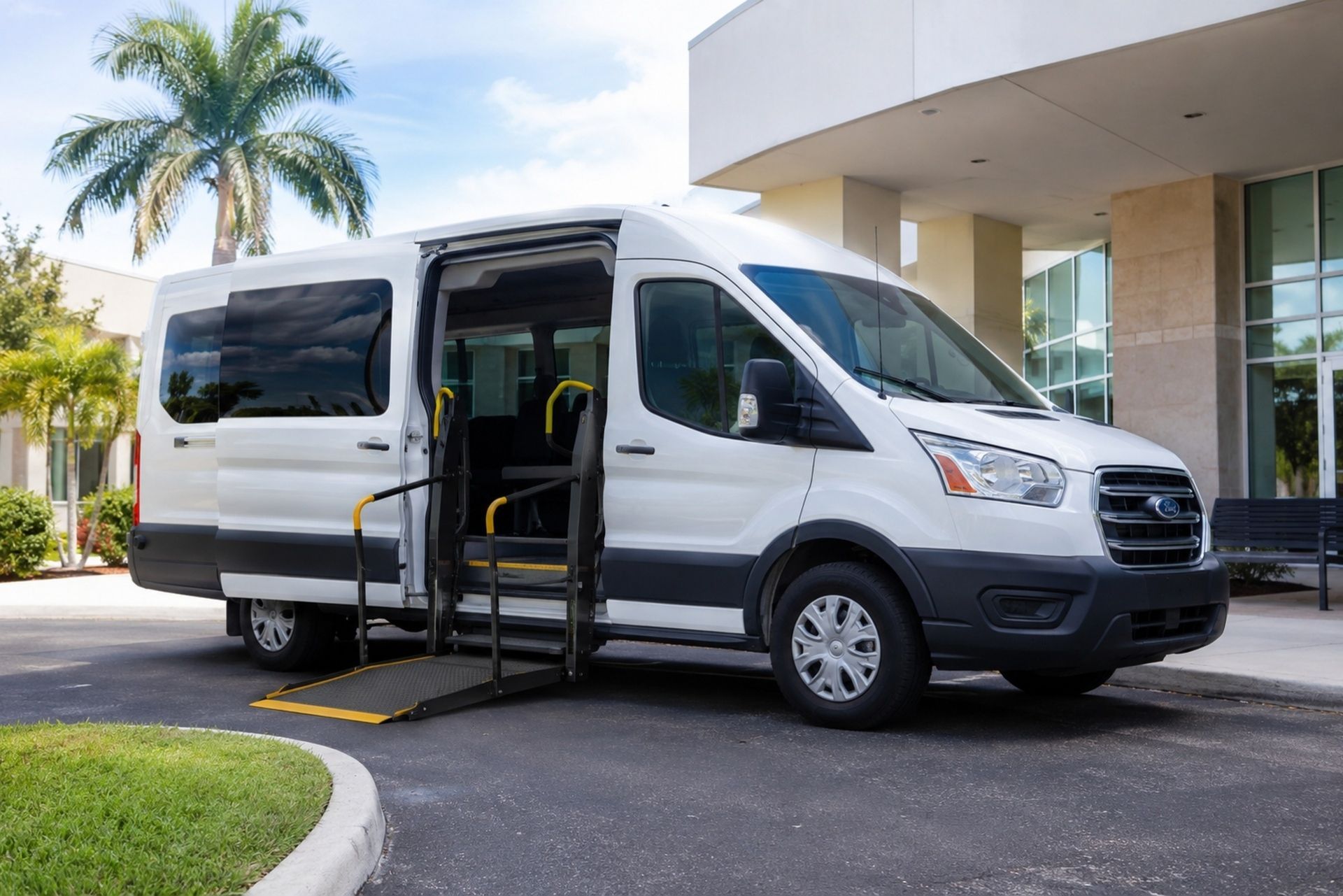
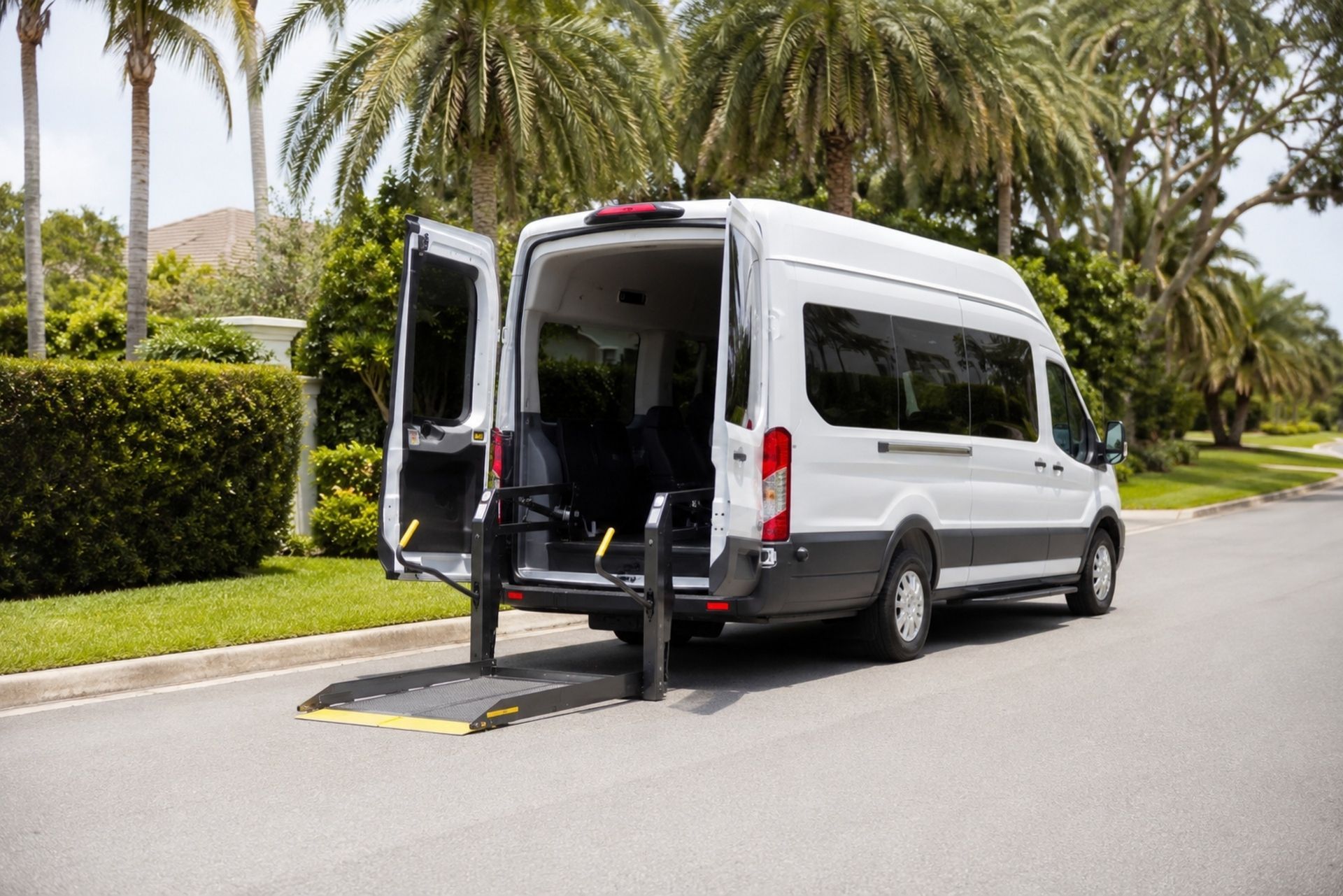
A standard minivan used for ambulatory patients costs far less to insure than a side-entry wheelchair van with a hydraulic ramp. Stretcher transport vehicles carry even higher premiums because of the medical equipment on board and the acuity level of passengers.
Vehicles older than 10 years often face surcharges or outright coverage denials from preferred carriers. Florida's saltwater air accelerates corrosion on ramps, lifts, and tie-down hardware, which increases the likelihood of mechanical failure claims. Keeping your fleet age under seven years and documenting regular equipment inspections gives underwriters confidence and keeps your rates competitive.
Risk Management Strategies for Paratransit Fleets
The cheapest insurance claim is the one that never happens. Proactive risk management reduces both the frequency and severity of incidents, which directly lowers your renewal premiums over time.
Implementing Telematics and Dashcam Systems
GPS telematics systems track speed, braking patterns, idle time, and route compliance. Dashcams provide video evidence that can exonerate your driver in disputed claims. Together, these tools have become standard for well-run NEMT fleets.
Insurers increasingly offer telematics-based discounts. Fleets that share real-time driving data with their carrier can earn premium reductions of 8% to 12%. The upfront investment is modest : most systems cost $25 to $40 per vehicle per month. The real value shows up when a frivolous claim gets dismissed because your dashcam footage tells the full story. One operator in Broward County avoided a $180,000 liability payout after rear-facing camera footage proved the claimant's injuries predated the transport.
Patient Loading and Unloading Protocols
The most dangerous moments in any NEMT trip happen before the vehicle moves. Loading and unloading patients, especially those in wheelchairs or on stretchers, accounts for a disproportionate share of injury claims. A wheelchair that isn't properly secured to the Q-straint system can shift during transit, causing falls and fractures.
Written protocols should cover every step : ramp deployment, wheelchair positioning, four-point tie-down verification, and seatbelt checks. Require drivers to complete a loading checklist on every trip and store those records digitally. If a claim arises six months later, that checklist is your best defense.
Filing and managing claims correctly is just as important as having the right policy. Florida's legal environment creates unique challenges for medical transport providers.
Florida's No-Fault Laws and NEMT Exceptions
Florida's no-fault system means your PIP coverage pays first, regardless of who caused the accident. But NEMT operators face a wrinkle : passengers who suffer "serious injuries" as defined under Florida Statute 627.737 can step outside the no-fault system and sue you directly for pain and suffering. Serious injury includes significant scarring, permanent impairment, or death.
This threshold is lower than many operators realize. A frail, elderly passenger who breaks a hip during a hard stop may easily meet the serious injury standard, opening the door to a full tort claim against your company. Florida's 2023 tort reform reduced the statute of limitations for negligence claims from four years to two, which means claims now arrive faster. Your claims adjuster and attorney need to be responsive from day one, because delays in investigation can be fatal to your defense.
Selecting the Right Insurance Carrier for Long-Term Stability
Not every carrier that writes NEMT policies understands the Florida market. Some national insurers offer low introductory rates, then non-renew after a single claim. Others restrict coverage in hurricane-prone zip codes or exclude wheelchair lift malfunctions from their physical damage policies.
Look for carriers with a track record in medical transport, not just commercial auto. Ask about their claims handling process specifically for passenger injury claims. A carrier that assigns a dedicated adjuster familiar with AHCA regulations and Florida no-fault law will resolve claims faster and more favorably than a generalist team.
Work with an independent agent or broker who specializes in paratransit and NEMT insurance in Florida. They'll have access to multiple markets and can advocate on your behalf during underwriting. Request quotes from at least three carriers, and compare not just price but coverage terms, exclusions, and the carrier's AM Best financial strength rating. A policy from a carrier rated below A- may save you money today but leave you scrambling if they become insolvent during a major hurricane season.
Getting the right insurance coverage for your Florida NEMT operation isn't a one-time task. It requires annual policy audits, ongoing driver training, and a relationship with a carrier that understands the specific risks of transporting medically vulnerable passengers.
Start by pulling your current policy and comparing it against the coverage components outlined above. Check for gaps in professional liability, verify your per-vehicle limits meet AHCA requirements, and confirm that every vehicle on your fleet schedule matches your declarations page. If you're spending more than $15,000 per vehicle without telematics discounts or driver training credits, there's likely room to reduce costs without reducing protection. The operators who treat insurance as a strategic investment, rather than a grudging expense, are the ones who survive Florida's demanding regulatory and legal environment year after year.
Frequently Asked Questions
How much does NEMT insurance cost per vehicle in Florida? Most operators pay between $8,000 and $22,000 per vehicle per year in 2026. The exact cost depends on vehicle type, driver records, and your claims history.
Do I need separate insurance for wheelchair vans versus ambulatory vehicles? Both are typically covered under the same fleet policy, but wheelchair vans carry higher premiums due to the specialized equipment and increased passenger injury risk during loading.
What happens if my insurance lapses while I hold an AHCA license? AHCA will suspend your license immediately upon notification of a coverage gap. You won't be able to transport Medicaid patients until coverage is reinstated and proof is resubmitted.
Does Florida require uninsured motorist coverage for NEMT vehicles? Florida doesn't mandate UM/UIM coverage, but it's strongly recommended. Florida has one of the highest uninsured driver populations in the U.S., and a single accident with an uninsured at-fault driver can create massive out-of-pocket exposure.
Can telematics really lower my insurance premiums?
Yes. Fleets sharing real-time driving data with their insurer commonly see premium reductions of 8% to 12%, plus the added benefit of video evidence that can dismiss fraudulent claims.
ABOUT THE AUTHOR:
MONTREAL MORAND
With over 20 years of leadership experience in the insurance industry, I’ve dedicated my career to helping clients and agents make informed, confident decisions about their coverage. I’ve led high-performing teams, managed more than $128 million in premium, and earned multiple national awards for excellence. Today, my mission remains the same — to educate, empower, and provide dependable protection for the communities we serve.
Contact Us
Protect the Things That Matter Most
Reliable Coverage for Your Home & Lifestyle
Home Insurance
Protect your home, belongings, and personal liability with reliable coverage.
Stronger Coverage for Your Operations
Essential Protection for Your Company
Coverage built for businesses that depend on people, property, and equipment.
Industries We Support
Insurance for Everyday Local Businesses
Simple, reliable protection for the people who keep our communities running.
Plumbers
Plumbers Insurance
Protection for job-site hazards, tools, and customer property.
Restaurants
Restaurants Insurance
Coverage for fire risks, food inventory, and general liability.
HVAC Contractors
HVAC Contractors Insurance
Insurance for service vehicles, equipment, and installation risks.




Frequently Asked Questions
Helpful Answers to Common Questions
Quick guidance to help you understand your coverage.
What types of insurance does Macpherson Insurance Agency offer?
We provide both personal and commercial insurance solutions. On the personal side: homeowners, automobile, condo, renters, windstorm, flood, excess flood, and more. On the commercial side: general liability, property, inland marine, ocean marine, workers compensation, and more.
Do you specialize in homeowners insurance in South Florida?
Yes. We specialize in homeowners coverage in South Florida and work with multiple carriers based on your property’s age, location and replacement cost.
What does “replacement cost” mean in a policy?
Replacement cost is the cost to rebuild your home to the same standard it had before a loss — not the market value of your property.
Why is it important that my insurer is licensed in Florida?
Licensed Florida insurers are continuously monitored for financial stability — if one fails, the Florida Insurance Guaranty Fund may reimburse insureds for unpaid claims up to a limit.
Can I lower my homeowners premium with discounts?
Yes — mitigation features like impact glass, storm shutters, roof straps, and approved sheathing may qualify you for significant credit reductions.
Do you offer payment plans or premium financing?
Yes. In many cases, payment plans and premium financing are available to make coverage more affordable and manageable over time.
From the Blog
Helpful Tips & Insurance Guidance
Articles created to make insurance easier to understand.










Contact Us
Phone
Location