Florida's tree care industry operates in one of the most demanding environments in the country. Between hurricane seasons that can drop massive oaks onto homes, humidity that breeds
aggressive pests, and heat that pushes crews to their physical limits, arborists here face risks that professionals in other states rarely encounter. Understanding how tree service and arborist companies in Florida can stay protected isn't just about buying insurance policies or posting safety signs. It requires a comprehensive approach that addresses
environmental hazards, regulatory compliance, proper coverage, and smart business practices. A single uninsured claim from a fallen limb damaging a client's roof can devastate a small operation. A heat stroke incident without proper workers' compensation can trigger lawsuits and OSHA investigations simultaneously. The stakes are high, but the solutions are accessible when you know where to focus your attention. This guide breaks down the specific protections Florida tree care professionals need, from managing the unique risks of tropical climates to structuring contracts that shield your business from liability.
Florida's environment creates a perfect storm of occupational hazards for tree care professionals. The combination of extreme weather, aggressive wildlife, and year-round growing conditions means your crews face dangers that require specific protocols and protections.
Managing Heat Stress and Humidity Risks
Heat-related illness sends more Florida outdoor workers to emergency rooms than any other single cause. When temperatures hit 95°F with 80% humidity, the heat index can exceed 115°F, creating conditions where heat stroke can develop in under an hour.
Your heat illness prevention program should include mandatory hydration schedules, not just suggestions to drink water. Require 8 ounces every 15-20 minutes during peak heat hours. Establish shaded rest areas at every job site and train crew leaders to recognize early warning signs like confusion, slurred speech, or cessation of sweating.
Schedule heavy climbing and chainsaw work for early morning hours whenever possible. Afternoon hours should focus on ground-level cleanup and equipment maintenance. This simple scheduling adjustment can reduce heat-related incidents by more than half according to industry data.
Storm Response and Emergency Tree Care Safety
Post-hurricane work represents both your biggest revenue opportunity and your greatest liability exposure. Homeowners desperate to clear fallen trees often pressure crews to work faster than safe practices allow. Downed power lines, structurally compromised trees, and unstable debris piles create hazards that don't exist during routine maintenance.
Develop a storm response protocol that includes mandatory site assessment before any cutting begins. Train crews to identify energized lines, even when they appear dead. Coordinate with local utilities rather than assuming power has been disconnected. Document every hazard identified and every safety measure taken before starting work.
Identifying Local Biological Threats and Pests
Florida hosts several biological hazards that can injure workers or create liability issues. Fire ant colonies frequently nest in tree bases and root flares, attacking climbers who disturb them. The caterpillars of puss moths and saddleback caterpillars deliver intensely painful stings that can cause allergic reactions.
Invasive species like the spiraling whitefly and rugose spiraling whitefly have spread across South Florida, creating sticky honeydew deposits that make climbing surfaces slippery. Train crews to identify these hazards during pre-climb inspections and carry appropriate first aid supplies for venomous encounters.
By: Montreal Morand
Founder & Managing Partner
Macpherson Insurance Agency
Essential Insurance Coverage for Tree Care Professionals
The right insurance coverage forms the foundation of how tree service and arborist companies in Florida can stay protected from financial ruin. Generic business policies rarely address the specific risks inherent to tree work.
Workers' Compensation Requirements in Florida
Florida law requires workers' compensation coverage for any tree service company with one or more employees. The construction classification that covers tree work carries some of the highest premium rates in the state, typically ranging from $15 to $25 per $100 of payroll.
Don't make the mistake of misclassifying employees as independent contractors to avoid these costs. The state actively investigates tree care companies, and penalties for misclassification include back premiums, fines, and potential criminal charges. Legitimate subcontractors must provide certificates of insurance before working on your jobs.
| Coverage Type | Minimum Recommended | What It Protects |
|---|---|---|
| Workers' Comp | State-required minimums | Employee injuries, medical costs, lost wages |
| General Liability | $1 million per occurrence | Property damage, third-party injuries |
| Professional Liability | $500,000 minimum | Advice errors, improper pruning claims |
| Commercial Auto | $1 million combined | Vehicle accidents, equipment transport |
General Liability and Professional Indemnity
General liability insurance protects against property damage and third-party injuries. When a branch drops onto a client's car or a falling tree damages a neighbor's fence, this coverage responds. Most Florida municipalities require proof of general liability before issuing tree care permits.
Professional liability, sometimes called errors and omissions coverage, addresses claims arising from your professional advice. If you recommend removing a tree that later proves to have been savable, or if improper pruning techniques lead to tree death, professional liability covers the resulting claims. Many arborists overlook this coverage until they face their first negligence lawsuit.
Technical Safety Standards and Equipment Maintenance
Compliance with industry safety standards protects both your workers and your business from regulatory penalties. Florida follows federal OSHA requirements while adding state-specific regulations through the Division of Safety.
OSHA and ANSI Z133 Compliance for Arborists
The ANSI Z133 standard represents the consensus safety requirements for arboricultural operations. While not directly enforceable by law, OSHA investigators use Z133 as the benchmark for determining whether employers maintained safe workplaces. Violations of Z133 principles frequently become the basis for OSHA citations.
Key compliance areas include fall protection for any work above six feet, proper rigging procedures for limb removal, and chainsaw safety protocols. Document your training programs and keep records showing each employee's completion of required safety modules. These records become critical evidence if an incident occurs.
Personal Protective Equipment for Tropical Climates
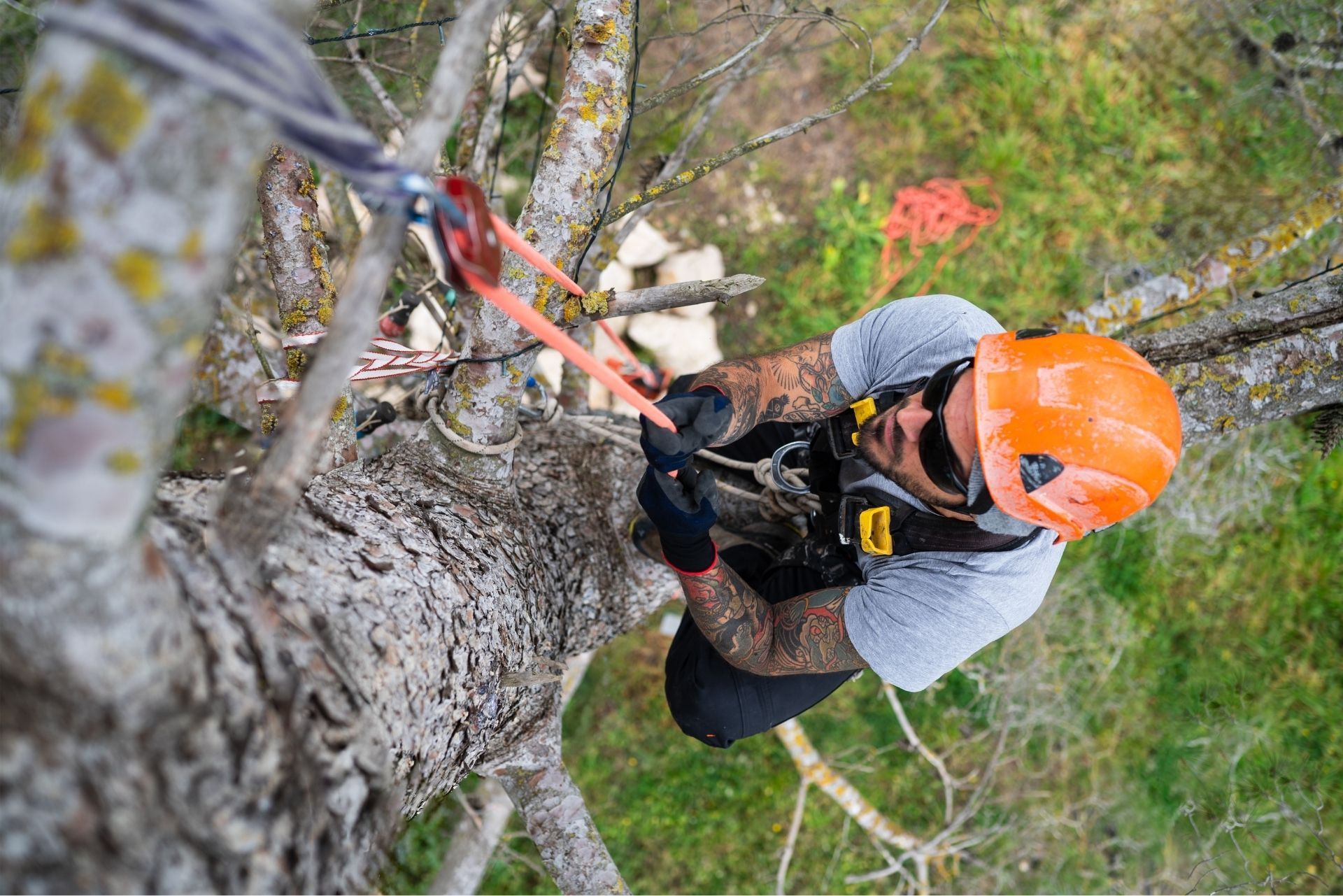
Standard PPE requirements don't account for Florida's heat and humidity. Heavy chainsaw chaps and full-face shields become unbearable when temperatures climb, leading workers to remove protection at exactly the wrong moments.
Invest in tropical-weight chainsaw protection designed for hot climates. Ventilated helmets with integrated face shields and hearing protection reduce heat buildup compared to separate components. Provide multiple sets of gloves so workers can rotate through dry pairs as sweat accumulates.
Legal Protections and Florida Contract Best Practices
Strong contracts and proper documentation provide legal protection that insurance alone cannot offer. Florida courts have specific expectations for service agreements in high-risk industries.
Understanding Liability in Hurricane Damage Removal
Emergency storm work creates unique liability situations. Trees that fell due to the storm itself carry different liability implications than trees that fall because of improper removal techniques. Document the condition of every tree before beginning work, including photographs showing existing damage, lean angles, and proximity to structures.
Florida's Good Samaritan laws provide some protection for emergency responders, but commercial tree services don't qualify for these exemptions. You remain fully liable for any damage caused by your removal efforts, even during declared emergencies.
Utilizing Proper Waivers and Service Agreements
Every job should begin with a signed service agreement that clearly defines the scope of work, payment terms, and liability limitations. Include specific language acknowledging that tree work carries inherent risks and that the property owner accepts responsibility for pre-existing conditions.
Waiver clauses have limitations under Florida law. You cannot waive liability for gross negligence or intentional misconduct. You can, however, establish clear expectations about acceptable risks and require clients to acknowledge them before work begins.
Professional Certification as a Defense Strategy
Credentials demonstrate competence and provide legal protection when disputes arise. Courts and insurance adjusters view certified arborists more favorably than uncredentialed operators.
ISA Florida Chapter Training Resources
The International Society of Arboriculture Florida Chapter offers certification programs specifically relevant to regional conditions. Their Certified Arborist credential requires passing an examination covering tree biology, diagnosis, and safe work practices. Maintaining certification requires ongoing continuing education.
Beyond the basic certification, the Tree Risk Assessment Qualification provides specialized training in evaluating hazard trees. This credential proves particularly valuable when clients later claim you should have identified a dangerous tree before failure.
Frequently Asked Questions
How much general liability insurance do Florida tree services typically carry? Most carry $1 million per occurrence with $2 million aggregate limits. Larger commercial contracts often require $5 million or more.
Can I be held liable for a tree that fails months after I pruned it? Yes, if improper pruning contributed to the failure. Document your work with photographs and maintain records showing you followed ANSI A300 pruning standards.
Do I need separate insurance for stump grinding? Most general liability policies cover stump grinding, but verify with your carrier. Underground utility damage from grinding operations represents a common claim type.
What happens if an employee is injured and I don't have workers' compensation? You face personal liability for all medical costs and lost wages, plus state penalties that can include criminal charges for willful non-compliance.
Are verbal agreements enforceable for tree work in Florida? Technically yes, but they're nearly impossible to prove in court. Always use written contracts specifying exactly what work will be performed.
Making Smart Protection Choices for Your Tree Care Business
Protecting your Florida tree service requires attention across multiple fronts simultaneously. Insurance provides financial protection, but only when you carry the right types and adequate limits. Safety compliance keeps workers healthy and shields you from regulatory penalties. Strong contracts establish clear expectations and limit your exposure when things go wrong.
Start by auditing your current protections against the risks outlined here. Identify gaps in your insurance coverage, training programs, or documentation practices. Address the highest-risk areas first, then build comprehensive protection over time. The investment you make in protection today prevents the catastrophic losses that end tree care businesses every year.
ABOUT THE AUTHOR:
MONTREAL MORAND
With over 20 years of leadership experience in the insurance industry, I’ve dedicated my career to helping clients and agents make informed, confident decisions about their coverage. I’ve led high-performing teams, managed more than $128 million in premium, and earned multiple national awards for excellence. Today, my mission remains the same — to educate, empower, and provide dependable protection for the communities we serve.
Contact Us
Protect the Things That Matter Most
Reliable Coverage for Your Home & Lifestyle
Home Insurance
Protect your home, belongings, and personal liability with reliable coverage.
Stronger Coverage for Your Operations
Essential Protection for Your Company
Coverage built for businesses that depend on people, property, and equipment.
Industries We Support
Insurance for Everyday Local Businesses
Simple, reliable protection for the people who keep our communities running.
Plumbers
Plumbers Insurance
Protection for job-site hazards, tools, and customer property.
Restaurants
Restaurants Insurance
Coverage for fire risks, food inventory, and general liability.
HVAC Contractors
HVAC Contractors Insurance
Insurance for service vehicles, equipment, and installation risks.




Frequently Asked Questions
Helpful Answers to Common Questions
Quick guidance to help you understand your coverage.
What types of insurance does Macpherson Insurance Agency offer?
We provide both personal and commercial insurance solutions. On the personal side: homeowners, automobile, condo, renters, windstorm, flood, excess flood, and more. On the commercial side: general liability, property, inland marine, ocean marine, workers compensation, and more.
Do you specialize in homeowners insurance in South Florida?
Yes. We specialize in homeowners coverage in South Florida and work with multiple carriers based on your property’s age, location and replacement cost.
What does “replacement cost” mean in a policy?
Replacement cost is the cost to rebuild your home to the same standard it had before a loss — not the market value of your property.
Why is it important that my insurer is licensed in Florida?
Licensed Florida insurers are continuously monitored for financial stability — if one fails, the Florida Insurance Guaranty Fund may reimburse insureds for unpaid claims up to a limit.
Can I lower my homeowners premium with discounts?
Yes — mitigation features like impact glass, storm shutters, roof straps, and approved sheathing may qualify you for significant credit reductions.
Do you offer payment plans or premium financing?
Yes. In many cases, payment plans and premium financing are available to make coverage more affordable and manageable over time.
From the Blog
Helpful Tips & Insurance Guidance
Articles created to make insurance easier to understand.





Contact Us
Phone
Location