
Opening a franchise in Florida comes with a built-in brand, a proven business model, and a stack of insurance paperwork that can overwhelm even experienced operators. Between what the state requires by law, what your franchisor demands in the Franchise Disclosure Document, and what Florida's hurricane-prone climate practically forces you to carry, the insurance picture is more complex here than in most states. Understanding franchise business insurance in Florida, from franchisor requirements and general liability to workers' compensation, certificates, and costs, can save you thousands of dollars and prevent a coverage gap that shuts your doors after a single claim. This guide breaks down each layer of coverage so you can build a policy portfolio that satisfies your franchisor, complies with Florida law, and actually protects your investment.
Understanding Florida's Mandatory Insurance Laws for Business Owners
Florida doesn't leave insurance decisions entirely up to you. The state sets minimum coverage thresholds that apply regardless of what your franchise agreement says, and ignoring them triggers fines, license suspensions, or worse. If you're hiring employees, operating vehicles, or leasing commercial space, you'll encounter at least two mandatory policy types before you even open.
Florida Workers' Compensation Rules
Florida's workers' comp requirements depend on your industry. Construction businesses must carry coverage with just one employee on payroll. Non-construction businesses, which includes most franchise operations like restaurants, retail shops, and service centers, must carry workers' compensation once they have four or more employees. Corporate officers can sometimes exempt themselves, but that exemption doesn't reduce your headcount for threshold purposes.
The good news for 2026 : Florida Insurance Commissioner Mike Yaworsky approved a 6.9% statewide rate decrease for workers' comp policies effective January 1, 2026, marking nine straight years of declining rates. That trend has made Florida more affordable for franchise owners staffing up new locations. Still, your actual premium depends on classification codes, payroll size, and your experience modification rate.
Commercial Auto Insurance for Fleet and Delivery
If your franchise uses vehicles for delivery, service calls, or employee transport, Florida's auto insurance rules apply. Florida remains a no-fault state after SB 522 died in committee in March 2026, so you're still required to carry $10,000 in Personal Injury Protection (PIP) per vehicle according to Florida Statute § 627.736. Most franchisors demand far higher limits than that state minimum, often $1 million in combined single-limit coverage.
A pizza delivery franchise in Jacksonville or a mobile pet grooming operation in Tampa won't survive a serious at-fault accident on $10,000 in PIP alone. Your franchisor knows this, and your FDD will spell out the exact commercial auto limits you need to meet.

By: Montreal Morand
Founder & Managing Partner
Macpherson Insurance Agency
Standard Insurance Requirements in Franchise Disclosure Documents (FDD)
Your FDD is a contract, not a suggestion list. Item 8 of the FDD outlines every insurance policy the franchisor requires, including minimum limits, carrier ratings, and certificate delivery deadlines. Missing a single requirement can put your franchise agreement in default.
General Liability and Vicarious Liability
Most FDDs require a commercial general liability (CGL) policy with limits that satisfy the franchisor's specific risk standards. This covers slip-and-fall injuries, property damage to third parties, and advertising injury claims. For Florida small businesses, general liability premiums typically range from $30 to $85 per month, though franchise operations with higher foot traffic or food service often land at the upper end.
The vicarious liability angle matters here. If a customer gets hurt at your franchise location, they can sue both you and the franchisor. That's exactly why franchisors are so specific about your CGL limits : they're protecting themselves as much as they're protecting you. Florida's reduction of the negligence statute of limitations from four years to two years under HB 837 has helped stabilize liability rates, but it hasn't eliminated the exposure.
Naming the Franchisor as an Additional Insured
Nearly every franchise agreement requires you to add the franchisor (and sometimes their parent company and affiliates) as an additional insured on your general liability policy. This gives the franchisor coverage under your policy if a claim arises from your operations. You'll also need to provide a Certificate of Insurance (COI) proving the additional insured status, often annually and sometimes before you even sign the lease.
Here's where operators get caught : if your policy lapses or you forget to renew the COI, the franchisor receives a cancellation notice from your insurer. That triggers a default under your franchise agreement. Set calendar reminders 60 days before every renewal to avoid this entirely preventable problem.
Comparing Essential Coverage Types for Florida Franchises
Not all policies serve the same purpose, and confusing them leads to gaps. Two of the most commonly misunderstood coverages are general liability and professional liability.
Table : General Liability vs. Professional Liability
| Feature | General Liability (CGL) | Professional Liability (E&O) |
|---|---|---|
| What it covers | Bodily injury, property damage, advertising injury | Errors, omissions, negligent advice |
| Typical franchise need | Required in nearly all FDDs | Required for service-based franchises (tax prep, consulting, staffing) |
| Common claim example | Customer slips on wet floor in your store | Tax franchise files incorrect return causing client financial loss |
| Typical Florida monthly cost | $30 to $85 for small businesses | Varies depending on profession |
| Required by Florida law? | Not mandated by state, but required by most franchisors and landlords | Not mandated by state, but often required by franchisor |
| Defense costs | Usually included within policy limits | Usually included within policy limits |
If your franchise provides professional advice or services, you likely need both policies. A home inspection franchise, for example, needs CGL for physical injuries at the property and E&O for a missed defect that costs the buyer thousands.
Climate-Specific Risks for Florida Franchisees
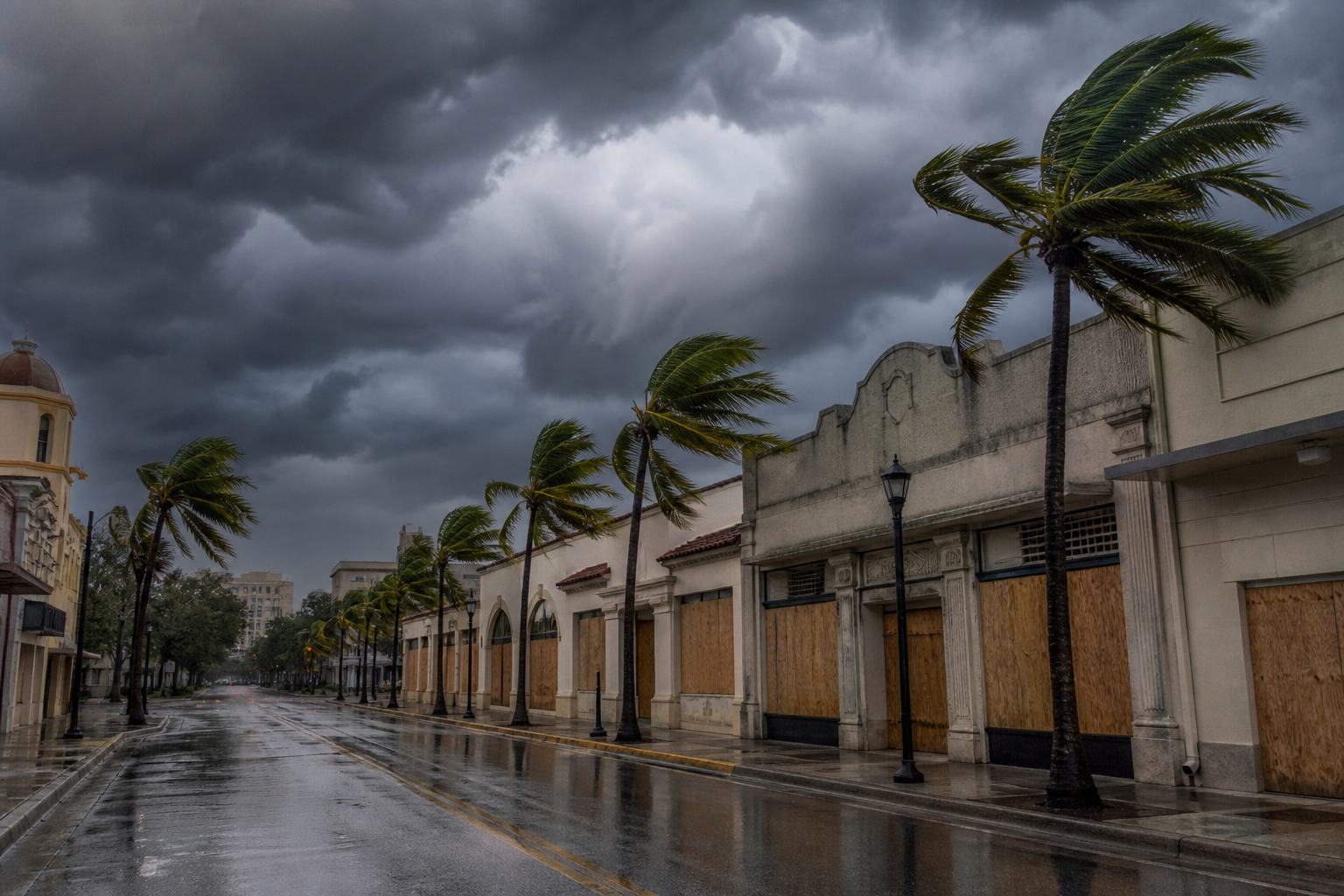
Florida's geography creates insurance needs you won't find in franchise operations up north. A standard property policy won't cover everything your location faces between June and November.
Flood and Hurricane Windstorm Coverage
Standard commercial property policies exclude flood damage entirely. If your franchise sits in a FEMA-designated flood zone, and many Florida locations do, you need a separate flood policy through the National Flood Insurance Program or a private flood insurer. Windstorm coverage is another gap : in many coastal counties, your property insurer carves out wind damage and you must purchase a separate windstorm policy, sometimes through Citizens Property Insurance Corporation.
The bright side is that property insurance rates have been dropping in 2026, with cuts ranging from 3.2% to 10.4% approved for several private insurers. That relief is welcome, but don't mistake lower premiums for complete coverage. Read every exclusion on your property policy before assuming you're protected.
Business Interruption Insurance for Seasonal Disruptions
A hurricane doesn't just damage your building. It kills revenue for days or weeks while you're closed for repairs, waiting on inspections, or dealing with supply chain delays. Business interruption coverage is particularly vital in Florida to cover lost revenue during hurricane-related shutdowns. This coverage pays your ongoing expenses, including rent, payroll, and loan payments, while your franchise location is unable to operate due to a covered event.
One thing to keep in mind : business interruption policies in Florida are standardly subject to a "time element" deductible, which is a
waiting period of 48 to 72 hours before the insurer begins reimbursing lost net income. They also require that the interruption result from direct physical damage covered under your property policy. If you don't have windstorm or flood coverage, your business interruption policy won't pay out for a hurricane-related closure either. The policies work together, and gaps in one create gaps in the other.
Common Questions About Florida Franchise Insurance
FAQ : Cost, Compliance, and Claims
How much does franchise insurance cost in Florida per month? It depends on your coverage package. General liability alone runs $30 to $85 monthly for most small businesses, but a full franchise insurance package including property, workers' comp, commercial auto, and umbrella coverage will vary significantly depending on your industry, location, and payroll.
Can my franchisor cancel my agreement if I don't carry the required insurance? Yes. Insurance compliance is a material obligation under virtually every franchise agreement. A lapse in coverage or failure to provide updated certificates can trigger a default notice, and repeated violations can lead to termination.
Do I need cyber liability insurance for my franchise? Many franchisors now require it, especially if you process credit card payments or store customer data. Cyber insurance applications in 2026 have shifted from self-attestation to technical audits requiring verified evidence of multi-factor authentication and outside-in scans, so prepare for a more rigorous underwriting process.
Does my franchisor's insurance cover my location? Almost never. The franchisor's corporate policies protect the franchisor. You're an independent business owner, and you're responsible for insuring your own location, employees, and operations.
Should I use the insurance broker my franchisor recommends? It's worth getting a quote from them since they'll understand the FDD requirements. But always compare with at least two independent brokers who specialize in franchise or commercial insurance. Franchise-recommended brokers aren't always the most competitive on price.
What is an EPLI policy, and do franchise owners need one? Employment Practices Liability Insurance covers claims like wrongful termination, discrimination, and harassment lawsuits. Even baseless EPLI claims can cost tens of thousands in legal fees without proper coverage. If you have employees, it's worth serious consideration.
Making the Right Choice for Your New Location
Getting franchise business insurance right in Florida means layering state-mandated coverage, franchisor requirements, and climate-specific protections into a single cohesive program. Start by reading Item 8 of your FDD line by line. Then match those requirements against Florida's mandatory minimums for workers' comp and auto insurance. Finally, address the gaps that Florida's weather creates : flood, windstorm, and business interruption coverage that your standard policies won't include.
Here's a quick compliance checklist before you open :
- Confirm workers' comp is in place if you meet the employee threshold
- Verify your CGL limits match or exceed FDD requirements
- Add the franchisor as an additional insured and deliver the COI
- Purchase separate flood and windstorm policies if your location requires them
- Secure business interruption coverage tied to your property policy
- Get quotes from at least two brokers, one franchise-specialist and one independent
Don't wait until a storm warning or a slip-and-fall lawsuit to discover you're underinsured. Build your insurance program before you sign the lease, review it annually, and treat every COI deadline like a franchise obligation, because it is one.
ABOUT THE AUTHOR:
MONTREAL MORAND
With over 20 years of leadership experience in the insurance industry, I’ve dedicated my career to helping clients and agents make informed, confident decisions about their coverage. I’ve led high-performing teams, managed more than $128 million in premium, and earned multiple national awards for excellence. Today, my mission remains the same — to educate, empower, and provide dependable protection for the communities we serve.
Contact Us
Protect the Things That Matter Most
Reliable Coverage for Your Home & Lifestyle
Home Insurance
Protect your home, belongings, and personal liability with reliable coverage.
Stronger Coverage for Your Operations
Essential Protection for Your Company
Coverage built for businesses that depend on people, property, and equipment.
Industries We Support
Insurance for Everyday Local Businesses
Simple, reliable protection for the people who keep our communities running.
Plumbers
Plumbers Insurance
Protection for job-site hazards, tools, and customer property.
Restaurants
Restaurants Insurance
Coverage for fire risks, food inventory, and general liability.
HVAC Contractors
HVAC Contractors Insurance
Insurance for service vehicles, equipment, and installation risks.




Frequently Asked Questions
Helpful Answers to Common Questions
Quick guidance to help you understand your coverage.
What types of insurance does Macpherson Insurance Agency offer?
We provide both personal and commercial insurance solutions. On the personal side: homeowners, automobile, condo, renters, windstorm, flood, excess flood, and more. On the commercial side: general liability, property, inland marine, ocean marine, workers compensation, and more.
Do you specialize in homeowners insurance in South Florida?
Yes. We specialize in homeowners coverage in South Florida and work with multiple carriers based on your property’s age, location and replacement cost.
What does “replacement cost” mean in a policy?
Replacement cost is the cost to rebuild your home to the same standard it had before a loss — not the market value of your property.
Why is it important that my insurer is licensed in Florida?
Licensed Florida insurers are continuously monitored for financial stability — if one fails, the Florida Insurance Guaranty Fund may reimburse insureds for unpaid claims up to a limit.
Can I lower my homeowners premium with discounts?
Yes — mitigation features like impact glass, storm shutters, roof straps, and approved sheathing may qualify you for significant credit reductions.
Do you offer payment plans or premium financing?
Yes. In many cases, payment plans and premium financing are available to make coverage more affordable and manageable over time.
From the Blog
Helpful Tips & Insurance Guidance
Articles created to make insurance easier to understand.






Contact Us
Phone
Location